The Bottom Line
"A portable giant screen ruined by corner edge blurriness on non-standard IPD eye distances, heavy battery drain on handheld consoles, nose pad pressure, and audio leakage."
What We Like
- ✓Crisp 1080p Sony Micro-OLED panels in dark center sweet spot
- ✓120Hz high refresh rate for smooth gaming playback
- ✓Direct USB-C DisplayPort Alt Mode plug-and-play simplicity
- ✓Lightweight foldable design for travel
What We Don't Like (Downsides)
- ×Corner edge blurriness causes game HUD text to look fuzzy on non-matching IPD distance
- ×No internal battery—drains Steam Deck or iPhone battery in under 1.5–2 hours
- ×Birdbath optics frame presses heavy weight onto the bridge of your nose
- ×HDR10 mode exhibits raised gray black levels and noticeable color banding
- ×Temple micro-speakers leak audio to nearby people on planes and buses
Steam Deck & ROG Ally handheld gamers playing in dark rooms or travel flights, Travelers wanting a private 201-inch movie screen for iPhone 15/16/17 and Android
Users with wide/narrow IPDs or prescription vision without custom inserts, Hardcore AR developers expecting 6DOF spatial tracking & room mapping, Long gaming sessions without an auxiliary USB-C power splitter adapter, Public commuters who dislike temple speaker sound leakage
Downside Compromise Score
Measures how many negative trade-offs this product demands.
Don't Buy RayNeo Air 4 Pro AR/XR Smart Glasses (201-Inch 120Hz Micro-OLED Virtual Display) If...
If any of these conditions apply to your use case, save your money or look at alternatives.
- Users with wide/narrow IPDs or prescription vision without custom inserts
- Hardcore AR developers expecting 6DOF spatial tracking & room mapping
- Long gaming sessions without an auxiliary USB-C power splitter adapter
- Public commuters who dislike temple speaker sound leakage
What the Marketing Doesn't Tell You
Comparing bold manufacturer advertisement claims with independent lab and field testing.
"201-Inch Cinema Screen Experience"
Fixed IPD optics mean if your pupil distance differs from average, all four corners of the 201-inch screen look blurry or cut off.
"Seamless USB-C Plug & Play"
Draws power directly from host devices. Gaming without an external USB-C power splitter drains a handheld console battery rapidly.
"HDR10 & Micro-OLED Contrast"
Dark scenes exhibit elevated gray black levels and backlight bleed effects despite Micro-OLED hardware branding.
The fixed IPD optics cause severe blurriness along the four corners of the virtual 201-inch screen unless your eyes sit in the exact pupil sweet spot. Furthermore, drawing power from your host phone or Steam Deck drains the battery in under 1.5–2 hours.
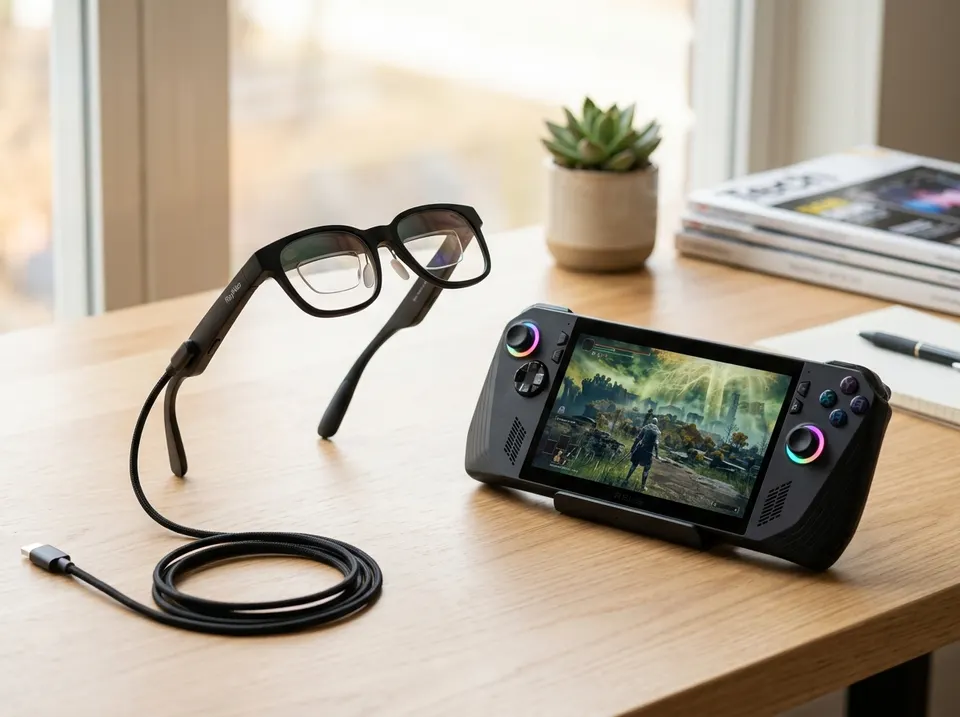
The RayNeo Air 4 Pro AR/XR Smart Glasses (201-Inch 120Hz Micro-OLED Virtual Display) promises to project a massive 201-inch virtual cinema screen directly into your field of view. Featuring dual Sony Micro-OLED panels, a 120Hz refresh rate, 3D playback support, and direct USB-C DisplayPort Alt Mode plug-and-play compatibility with iPhone 15/16/17, Android phones, Steam Deck, and Nintendo Switch 2, it is marketed as the ultimate portable gaming and movie accessory for $349.
However, the downside first: optical corner blurriness, face fitment limitations, rapid host battery drain, nose pad pressure, and audio leakage reveal critical trade-offs.
1. Corner Blurriness & Fixed IPD Sweet Spot
The biggest user complaint revolves around optics and pupil alignment:

- Fixed Inter-Pupillary Distance (IPD): Unlike VR headsets with mechanical IPD adjustment dials, the RayNeo Air 4 Pro uses a fixed optical distance.
- Fuzzy Game HUD Elements: If your eyes are slightly closer or wider than the average 63mm IPD, the center of the 201-inch screen looks sharp, but all four corners become blurry or cut off, making game health bars and small text unreadable.
2. No Internal Battery: Rapid Host Drain
The glasses have zero battery inside to keep the frame lightweight (76g):
- Host Device Battery Drain: The glasses draw 5V power continuously from your connected iPhone, iPad, or Steam Deck.
- Playing games on a Steam Deck with the glasses attached drains the handheld battery in under 90 minutes.
- Dongle Clutter: To play and charge simultaneously, you must buy an extra $35–$45 dual USB-C power splitter adapter.
3. Nose Pad Pressure & Facial Discomfort
To get your eyes into the optical “sweet spot” and reduce corner blur, you must push the glasses close to your face:
- Heavy Bridge Weight: The front birdbath glass prism structure weighs down heavily on the bridge of your nose.
- Red Marks: After 30 to 45 minutes of movie watching, users report painful red pressure indents on their nose.
4. Temple Speaker Audio Leakage
The arms of the glasses feature open-ear micro-speakers aimed down toward your ears:
- Zero Privacy: Sound leaks freely into the surrounding room. Anyone sitting next to you on an airplane, bus, or quiet bedroom can hear your movie dialogue or game sound effects.
- Using wireless earbuds alongside the glasses adds another layer of device management.
5. Summary: Great Portable Cinema, High Fitment Sensitivity
If you fit the average IPD distance, play handheld games in dark rooms, and don’t mind carrying a USB-C power adapter, the RayNeo Air 4 Pro offers a fun 120Hz virtual theater screen for $349.
However, if you have non-standard eye spacing, hate nose bridge pressure, or expect full 6DOF spatial computing, skip the RayNeo Air 4 Pro and look at adjustable alternatives like the XREAL Air 2 Pro or standalone VR headsets like the Meta Quest 3S.
True Cost of Ownership
Estimated total expenditure over 2 years including hidden secondary costs.
Score Breakdown
Detailed multi-vector rating metrics across key evaluation pillars.
Head-to-Head Comparison
How this product stacks up against key market competitors.
| Product | Price | Overall Rating | Downside Score | Best For | Key Trade-off / Verdict |
|---|---|---|---|---|---|
RayNeo Air 4 Pro AR/XR Smart Glasses (201-Inch 120Hz Micro-OLED Virtual Display) Reviewed Item | $349 | 6.8 / 10 | 8.0 / 10 | Steam Deck & ROG Ally handheld gamers playing in dark rooms or travel flights, Travelers wanting a private 201-inch movie screen for iPhone 15/16/17 and Android | "A portable giant screen ruined by corner edge blurriness on non-standard IPD eye distances, heavy battery drain on handheld consoles, nose pad pressure, and audio leakage." |
XREAL Air 2 Pro | $449 | 8.2 / 10 | 5.8 / 10 | Electrochromic lens dimming | "Higher price, but better electrochromic light control" |
Viture Pro XR Glasses | $459 | 8.0 / 10 | 6.0 / 10 | Myopia dial adjustments | "Includes built-in diopter dials for nearsighted users" |
Better Alternatives
Consider these options if the downsides of RayNeo Air 4 Pro AR/XR Smart Glasses (201-Inch 120Hz Micro-OLED Virtual Display) are dealbreakers for you.
"Better electrochromic dimming & cleaner optical sweet spot"
"True 6DOF spatial computing & standalone VR/AR"
Technical Specifications
Verified manufacturer specifications.
- Display Tech
- Dual Sony Micro-OLED (1920 x 1080 per eye)
- Virtual Screen Size
- 201-Inch @ 6 Meters (38 PPD)
- Refresh Rate
- 120Hz (SDR) / 60Hz (3D)
- Brightness
- Up to 600 nits (Perceived)
- Connectivity
- USB Type-C (DisplayPort Alt Mode)
- Weight
- 76g (Glasses body)
Frequently Asked Questions
Direct answers to common buyer concerns and uncertainties.
Why are the corners of the screen blurry on the RayNeo Air 4 Pro?
Birdbath optical lenses rely on fixed Inter-Pupillary Distance (IPD). If your eyes sit closer or wider than average, light rays hit the lens edges at an angle, causing text and HUD elements in game corners to look blurry.
Does the RayNeo Air 4 Pro have an internal battery?
No. The glasses have zero internal battery and draw power directly from your connected phone, iPad, or Steam Deck. Using a dual-port USB-C charge-and-play adapter is essential for long sessions.
Written by alex-chen
Verified ReviewerProduct reviewer and independent testing engineer.
Related Product Teardowns
View All Reviews →
Apple AirPods Pro 3
"Exceptional ANC and seamless Apple integration, but the walled garden, non-replaceable batteries, and planned obsolescence make the true cost much higher than the sticker price."
"Non-replaceable batteries limit lifespan"

Apple iPhone 18 Pro Leaks & Early Buyers Teardown (TSMC 2nm A20 Pro, Price Hikes & Under-Display Face ID Delays)
"An impressive TSMC 2nm technological milestone hindered by steep rumored price increases ($1,299+), delayed under-display Face ID, and variable aperture camera features restricted to the $1,499 Pro Max."
"Rumored starting price hikes ($1,299 Pro / $1,499 Pro Max)"

ASUS Vivobook Go 15 OLED Slim Laptop (AMD Ryzen 5 7520U, 8GB LPDDR5 RAM, 512GB SSD, E1504FA-AS54)
"A budget-friendly 15.6-inch laptop crippled by non-expandable 8GB soldered memory, an outdated Zen 2 CPU architecture, dim 250-nit screen, and plastic chassis flex."
"8GB LPDDR5 RAM is permanently soldered to the motherboard (Zero upgrade slots)"