The Bottom Line
"Xring O3 is a strategically important 3nm chip with impressive claimed performance, but buyers should judge the finished phone—not synthetic scores—because thermals, modem behavior, software tuning and availability remain unproven."
What We Like
- ✓TSMC 3nm manufacturing
- ✓Deep Xiaomi hardware-software integration potential
- ✓Ambitious CPU, GPU and AI roadmap
- ✓Could increase competition in mobile silicon
What We Don't Like (Downsides)
- ×Not a standalone retail product
- ×Synthetic benchmark claims are not independent proof
- ×Thermals and sustained performance are unknown
- ×Modem and global band behavior depend on the final device
- ×Initial shipment volume is limited
- ×Vertical integration increases Xiaomi ecosystem dependence
Technology followers evaluating Xiaomi's silicon strategy, Early adopters comfortable with first-generation risk, Buyers who will wait for full device reviews
Anyone treating benchmark claims as guaranteed daily performance, Buyers needing proven modem and update behavior, People expecting to purchase the chip separately
Downside Compromise Score
Measures how many negative trade-offs this product demands.
Don't Buy Xiaomi Xring O3 If...
If any of these conditions apply to your use case, save your money or look at alternatives.
- Anyone treating benchmark claims as guaranteed daily performance
- Buyers needing proven modem and update behavior
- People expecting to purchase the chip separately
What the Marketing Doesn't Tell You
Comparing bold manufacturer advertisement claims with independent lab and field testing.
"5.22 million AnTuTu points"
A launch benchmark claim does not establish sustained gaming speed, battery efficiency or final retail performance.
"3nm flagship performance"
Process node alone cannot prove good thermals, modem efficiency, drivers or application compatibility.
Xring O3 is not sold separately. Its real value depends on the phone around it: cooling, modem, memory, camera pipeline, firmware and Xiaomi’s update support.
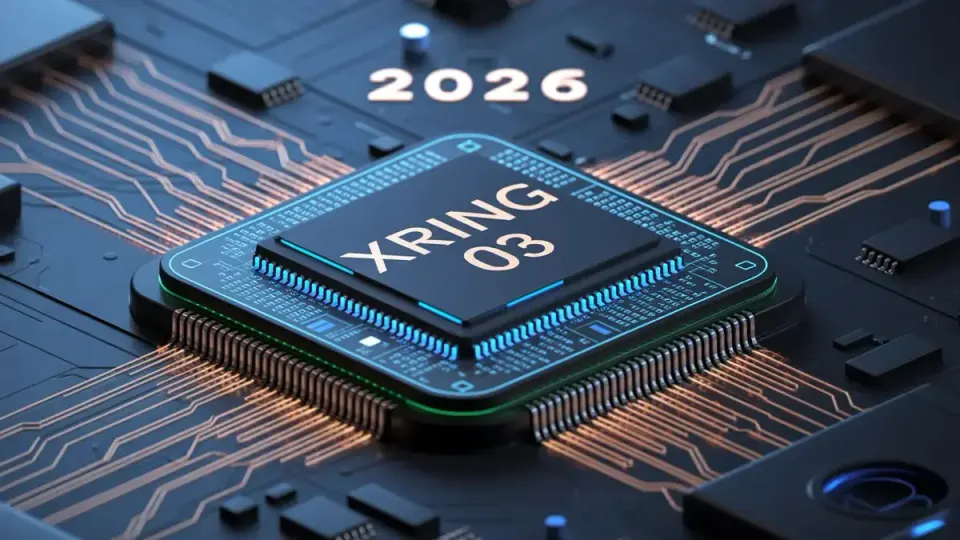
Xiaomi unveiled Xring O3 on August 24, 2026, advancing its in-house silicon effort with TSMC’s 3nm manufacturing. Reuters reports that the chip is expected in an upcoming flagship foldable and that initial shipments may be only 200,000 to 300,000 units. Ambition is clear; proof is not.
1. Benchmark Numbers Are Marketing, Not Experience
A reported 5.22-million AnTuTu result combines CPU, GPU, memory and software behavior into one synthetic score. It cannot show frame pacing after 30 minutes, camera-launch latency, standby drain or cellular efficiency.
2. Sustained Thermals Are Unknown
High peak clocks inside a thin foldable can produce heat and throttling. The 3nm node helps density and potential efficiency, but cooling design and power management determine whether performance lasts.
3. Modem Quality Can Make or Break the Device
Signal retention, roaming, carrier aggregation and idle power matter every day. Xiaomi has not yet built the public modem track record of Qualcomm or MediaTek, and the final device configuration remains essential.
4. Drivers and App Tuning Need Time
A new GPU and NPU require stable drivers, game profiles and developer support. Early devices may reveal bugs or inconsistent optimization that mature platforms have already resolved.
5. Limited Volume Means Limited Evidence
Reuters’ projected 200,000–300,000 shipments suggest a controlled debut. Fewer devices produce fewer repair cases, long-term battery reports and independent comparisons, making an early purchase harder to evaluate.
6. Vertical Integration Creates Lock-In
Xiaomi can tune HyperOS, imaging and AI closely around its chip. The same integration can tie features, updates and repair support more tightly to Xiaomi’s own ecosystem.
Verdict
Xring O3 may become an important competitor, but the correct buying advice is simple: review the finished phone, not the chip presentation. Wait for sustained benchmarks, modem tests, battery data and camera comparisons.
Sources and Verification
Editorial note: FlawCheck did not test an Xring O3 device. Manufacturer and secondary-source performance claims are identified as claims, not independent results.

Score Breakdown
Detailed multi-vector rating metrics across key evaluation pillars.
Head-to-Head Comparison
How this product stacks up against key market competitors.
| Product | Price | Overall Rating | Downside Score | Best For | Key Trade-off / Verdict |
|---|---|---|---|---|---|
Xiaomi Xring O3 Reviewed Item | $0 | 7.5 / 10 | 6.8 / 10 | Technology followers evaluating Xiaomi's silicon strategy, Early adopters comfortable with first-generation risk, Buyers who will wait for full device reviews | "Xring O3 is a strategically important 3nm chip with impressive claimed performance, but buyers should judge the finished phone—not synthetic scores—because thermals, modem behavior, software tuning and availability remain unproven." |
Snapdragon flagship platform | $0 | 8.8 / 10 | 4.8 / 10 | Proven Android compatibility | "More mature drivers and wider device adoption" |
Better Alternatives
Consider these options if the downsides of Xiaomi Xring O3 are dealbreakers for you.
"Mature Android flagship ecosystem"
"Established efficiency and modem integration"
Technical Specifications
Verified manufacturer specifications.
- Manufacturing
- TSMC 3nm
- Announced
- August 24, 2026
- Initial target
- Upcoming Xiaomi flagship foldable
- Projected shipments
- 200,000–300,000 units, according to Reuters sources
- Availability
- Integrated chip; not sold separately
Frequently Asked Questions
Direct answers to common buyer concerns and uncertainties.
Can I buy the Xiaomi Xring O3?
No. It is a system-on-chip expected inside selected Xiaomi devices, not a standalone consumer product.
Is the 5.22 million AnTuTu result verified?
It is a reported launch claim and should not be treated as independent proof of sustained real-world performance.
Written by FlawCheck Editorial Desk
Editorial ResearchFlawCheck's editorial desk is responsible for source review, claim labeling, buyer-risk analysis, publication updates, and corrections. Current articles are research-based unless a documented hands-on method is explicitly provided.
Related Reviews and Buying Risks
View All Reviews →
Apple iPhone 18 Pro Leaks & Early Buyers Teardown
"An impressive TSMC 2nm technological milestone hindered by steep rumored price increases ($1,299+), delayed under-display Face ID, and variable aperture camera features restricted to the $1,499 Pro Max."
"Rumored starting price hikes ($1,299 Pro / $1,499 Pro Max)"

ASUS Vivobook Go 15 OLED Slim Laptop
"A budget-friendly 15.6-inch laptop crippled by non-expandable 8GB soldered memory, an outdated Zen 2 CPU architecture, dim 250-nit screen, and plastic chassis flex."
"8GB LPDDR5 RAM is permanently soldered to the motherboard (Zero upgrade slots)"

Boltt Ace 5G
"The Ace 5G offers a large battery, NFC and a clear update promise for its price, but the coarse display, 18W charging, heavy chassis and Boltt's unproven delivery record make waiting for independent tests the safer choice."
"6.79-inch display is only HD+"