Post-launch evidence notice: The iPhone 18 Pro is official, but FlawCheck has not handled or independently tested a retail unit. Official launch specifications are treated as confirmed product facts; some battery and GPU outcomes now have cited retail measurements; mixed-use battery, camera consistency, modem, display and durability remain unverified by FlawCheck. This page therefore remains not scored.
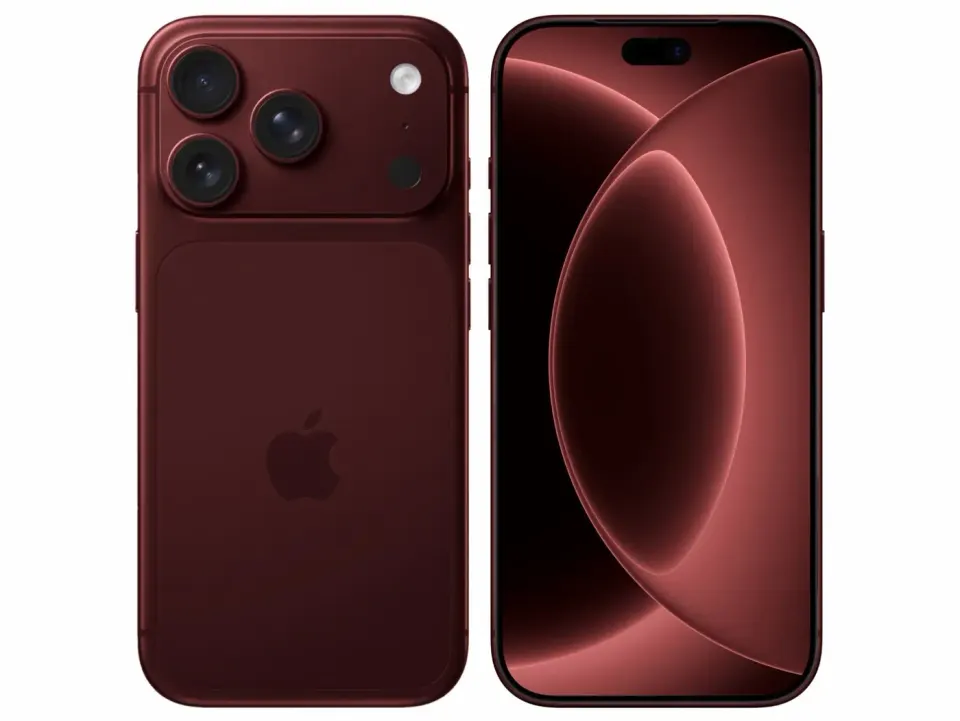
Image note: This is an unofficial concept illustration, not an official Apple product image.
The iPhone 18 Pro no longer has a rumor problem. It has a buyer-decision problem.
Apple’s September 9 launch answered the easy questions: the phone exists, it starts at $1,199 in the US, it uses the A20 Pro chip, introduces a variable-aperture 48MP main camera, and moves the Pro line to Apple’s C2 cellular modem.
Those facts still do not answer the question that matters to someone holding a working iPhone: are the improvements large enough to justify the cost and the risk of buying before independent testing is mature?
FlawCheck’s answer at launch is deliberately narrower than a conventional review. The new hardware is real. Its ownership benefits are not all proven yet.
Quick take: the downside case
The strongest reason to hesitate is not that the iPhone 18 Pro looks weak. It is that Apple has raised the entry price, while early measured gains must be weighed against missing mixed-use, modem and long-term evidence.
| Buyer question | What we know now | What still needs proof |
|---|---|---|
| Is it faster? | A20 Pro is confirmed | Sustained speed, heat and efficiency under long workloads |
| Is the camera better? | 48MP main camera with variable aperture is confirmed | Low-light consistency, moving subjects, flare, focus behavior and long video sessions |
| Is cellular better? | Apple C2 modem is confirmed | Weak-signal reliability, handoffs, hotspot behavior and battery drain |
| Is battery life better? | 16:17 in one controlled 5G browsing test vs 15:21 for 17 Pro | Mixed-use and weak-signal endurance |
| Is it worth upgrading? | New hardware is substantial on paper | Depends heavily on your current iPhone and measured gains |
That gap between announced capability and measured ownership benefit is where most early-buying risk sits.
1. The $1,199 starting price raises the burden of proof
The iPhone 18 Pro starts at $1,199 in the United States, with the Pro Max starting at $1,299. That means the new Pro generation enters at a higher price than many buyers may have mentally budgeted for a one-generation upgrade.
A price increase is not automatically bad value. It becomes a downside when the extra money pays for improvements that do not materially change how you use the phone.
For an iPhone 17 Pro owner, the relevant question is therefore not whether the iPhone 18 Pro is technically better. It almost certainly should be. The question is whether the difference in camera behavior, sustained performance, battery life or connectivity is large enough to justify replacing a one-year-old flagship.
Our dedicated iPhone 18 Pro vs iPhone 17 Pro comparison is the better decision page for that upgrade path.
2. A20 Pro is new—but launch-day speed claims are not ownership evidence
The A20 Pro is one of the headline changes. A new chip can improve peak performance, efficiency and on-device AI capability, but those improvements do not all translate equally into daily use.
The tests that matter for a downside-first review are longer and less glamorous than a launch benchmark:
- Repeated gaming runs rather than one peak score.
- Long camera and video sessions.
- Video export and other sustained workloads.
- Surface temperature after prolonged use.
- Performance after the phone is already warm.
- Battery consumed to complete the same workload.
A phone that finishes a benchmark faster but becomes hot or consumes more energy may be a worse ownership trade for some users than the headline score suggests.
A first Tom’s Guide’s retail review measured 62.8% stability for 18 Pro versus 61.1% for 17 Pro in the repeated 3DMark Wild Life Extreme Stress Test, despite a larger peak graphics gain. These are test-specific results, not a temperature reading. Until broader repeatable testing exists, FlawCheck will treat A20 Pro as a confirmed hardware upgrade, not a confirmed real-world advantage of a particular size.
For the generation context, see the A19 Pro–A20 Pro CPU results and comparison limits. They support a lead in the selected reported workloads; they do not establish how much faster every app will feel or replace this review’s model-specific ownership checks.
3. Variable aperture creates a more interesting camera—and another thing to validate
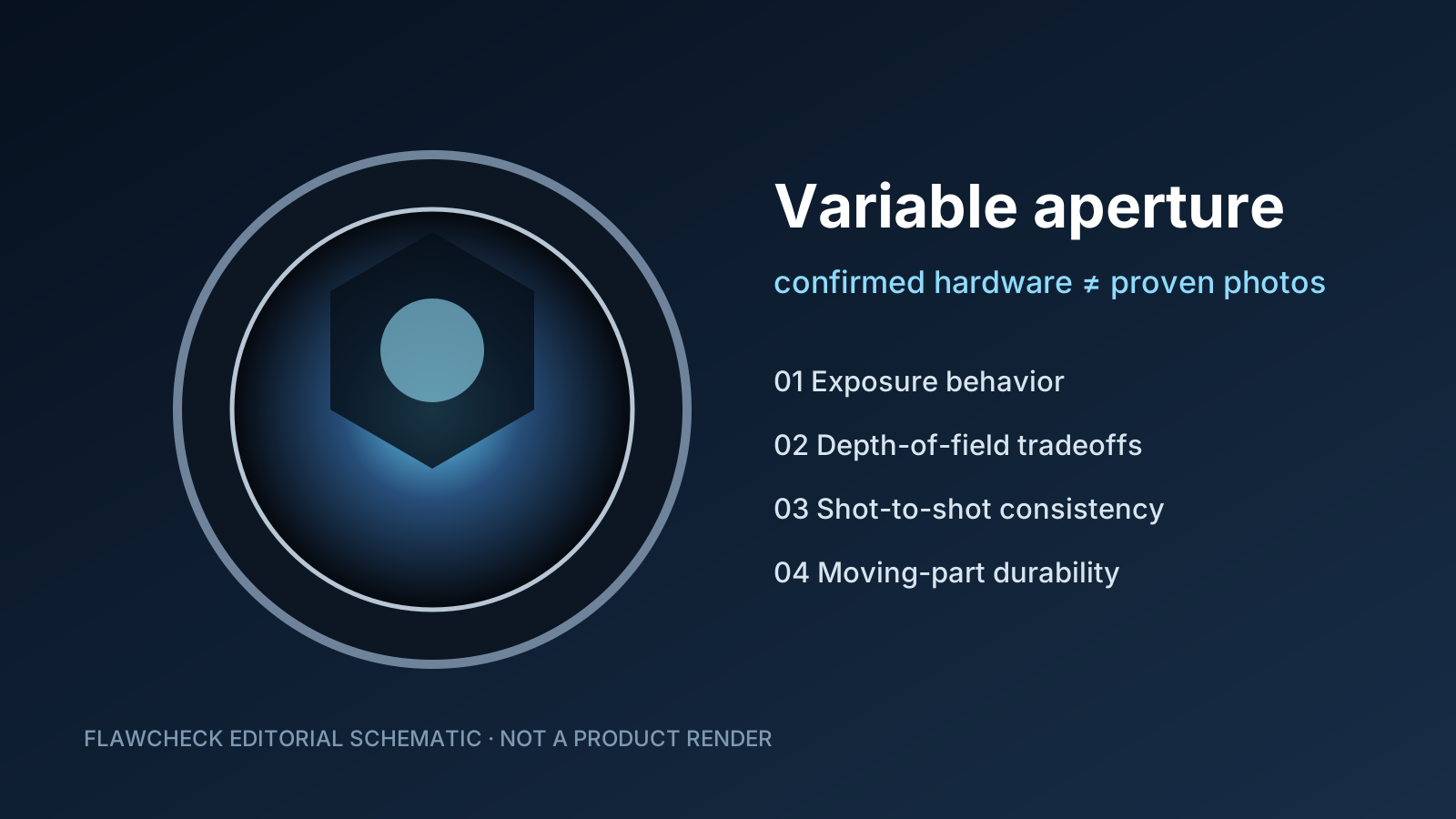
Apple’s 48MP Fusion main camera now uses variable aperture. This is one of the most technically interesting changes in the iPhone 18 Pro, because aperture can affect light intake and depth of field rather than merely adding another computational mode.
But more camera flexibility does not guarantee more consistent photographs.
We want independent comparisons covering:
- Moving children and pets indoors.
- Night scenes with bright point lights.
- Skin tones under mixed lighting.
- Focus consistency as aperture changes.
- Natural versus computational depth rendering.
- Lens flare and reflections.
- Long video recording and temperature.
The downside to watch is not simply “more moving parts.” It is whether the added camera complexity produces a benefit buyers can repeatedly see outside carefully chosen launch examples.
If the improvement is mostly situational, owners of recent Pro models may value it less than the specification suggests.
4. C2 modem performance is now a first-order buying question
The iPhone 18 Pro uses Apple’s C2 modem, extending Apple’s move away from Qualcomm modem hardware.
That makes connectivity one of the most important post-launch test categories.
A modem should not be judged by its name or maximum advertised throughput. Real ownership depends on behavior in difficult conditions:
- Weak indoor reception.
- Cell-edge stability.
- Handoffs while travelling.
- Voice reliability.
- Upload performance.
- Hotspot use.
- Battery drain on 5G.
- Regional band and carrier differences.
For buyers who live or work in weak-signal areas, a small modem regression can matter more than a large benchmark gain. We therefore will not label C2 an upgrade or downgrade until comparative testing supports that conclusion.
5. Battery claims need mixed-use testing, especially on cellular
In Tom’s Guide’s retail review, the 18 Pro averaged 16:17 in continuous 5G web browsing at 150 nits, versus 15:21 for 17 Pro. The 18 Pro Max averaged 18:27. These are useful early retail results, but they are not customer screen-on-time estimates. Manufacturer battery figures are useful for controlled comparisons, but they cannot reproduce every real day.
A demanding iPhone 18 Pro day may combine navigation, camera use, messaging, background sync, high display brightness and 5G in areas with inconsistent reception. The new chip and modem can both influence that result.
We want tests that disclose settings and separate Wi-Fi-heavy endurance from cellular-heavy endurance. Charging time and charging temperature also matter because faster charging can change the convenience equation without necessarily improving unplugged endurance.
Do not generalize a strong Pro Max battery result to the smaller Pro. Buyers choosing between sizes should use our iPhone 18 Pro vs iPhone 18 Pro Max comparison.
6. Early buyers still absorb the software-and-hardware discovery period
A launch event confirms specifications. It does not expose every edge case.
New camera behavior, a new modem generation and new software features create more surfaces for early firmware updates and compatibility discoveries. That does not mean the iPhone 18 Pro is likely to be unreliable. It means the first buyers have less accumulated evidence than buyers who wait several weeks.
Waiting is especially rational if your upgrade is meant to solve a specific problem such as overheating, weak reception, poor battery endurance or camera inconsistency. In those cases, buying before that exact problem has been tested defeats much of the reason to upgrade.
What an actual owner and an early bug report add
After a week using the 18 Pro in place of an iPhone Air, the writer of 9to5Mac’s first-person one-week account reported comfortable daily battery life, versatile cameras and no overheating in his use. That is one named owner’s experience against an Air, not a representative customer survey or a matched 17 Pro comparison.
9to5Mac’s reproduced Face ID report describes freezes and restarts after a failed Face ID attempt on both Pro sizes; its staff reproduced the failure on an 18 Pro and reported that Apple confirmed a software fix was being prepared. As of September 25, we have not verified that the fix has shipped. This is a documented early software issue, but its incidence and any lasting hardware implication remain unknown. If this occurs, document the iOS version and contact Apple Support; do not assume that a replacement unit is required.
7. The iPhone 17 Pro is now the uncomfortable comparison
The most dangerous competitor for a new flagship is often last year’s flagship already in your pocket.
An iPhone 17 Pro owner already has a modern Pro camera system, high-end performance and a mature accessory ecosystem. The iPhone 18 Pro needs to deliver more than a list of new component names to make replacement economically sensible.
This is why FlawCheck does not use “newer” as a synonym for “worth upgrading to.”
If your iPhone 17 Pro has healthy battery capacity and does everything you need, the default position should be keep it until the new benefits are measurable. If you own a substantially older generation, the cumulative upgrade case can be much stronger; our iPhone 18 upgrade guide handles that decision separately.
What changed from our pre-launch assessment?
Before September 9, this URL intentionally separated rumors from confirmed facts and refused to publish a speculative score or retail price.
After the announcement, we can now promote several items from “reported” to confirmed launch facts: the iPhone 18 Pro name, $1,199 US starting price, A20 Pro, variable-aperture main camera and C2 modem.
What we are not promoting to confirmed flaw status are claims about overheating, poor reception, disappointing battery life, camera defects or durability. Those require evidence from shipping hardware.
That distinction is important to FlawCheck’s flaw-intelligence model: a plausible risk is not a verified flaw.
Who should consider buying early?
An early purchase makes more sense if you are upgrading from an older iPhone, already planned to spend at the Pro price tier, and value the new camera or performance capabilities enough that small post-launch uncertainties would not change your decision.
It makes less sense if:
- You own an iPhone 17 Pro that still works well.
- $1,199 is already stretching your budget.
- Battery life is your main reason for upgrading.
- You frequently use your phone in weak-signal areas.
- Heat during gaming or video is a major concern.
- You are buying specifically for the variable-aperture camera.
- You intend to keep the phone for four or five years and care about repair economics.
Those buyers gain more from evidence than from being first.
What FlawCheck is waiting to test or verify
This article remains not scored. The next evidence gates are:
- Retail configuration: confirm shipping variants and regional differences.
- Battery: mixed-use and cellular-heavy endurance.
- Thermals: repeated sustained workloads with disclosed conditions.
- Camera: repeatable comparisons, especially variable-aperture behavior.
- C2 modem: weak-signal, handoff, hotspot and efficiency testing.
- Display: sustained brightness, minimum brightness and temporal modulation measurements.
- Ownership cost: repair pricing, parts availability and credible teardown evidence.
Only after enough of those records pass human review should the product become eligible for a FlawCheck score.
Current verdict
The iPhone 18 Pro is a more interesting product after launch than it was in rumor form—but that is not the same as being an automatic buy.
At $1,199, Apple is asking buyers to pay flagship money for improvements whose most important real-world consequences are still being measured. A20 Pro, variable aperture and C2 are legitimate reasons to investigate the phone. They are not reasons to skip the investigation.
For owners of recent iPhones, the downside-first move is simple: do not upgrade because the specification sheet changed. Upgrade when the measured improvement solves a problem you actually have.
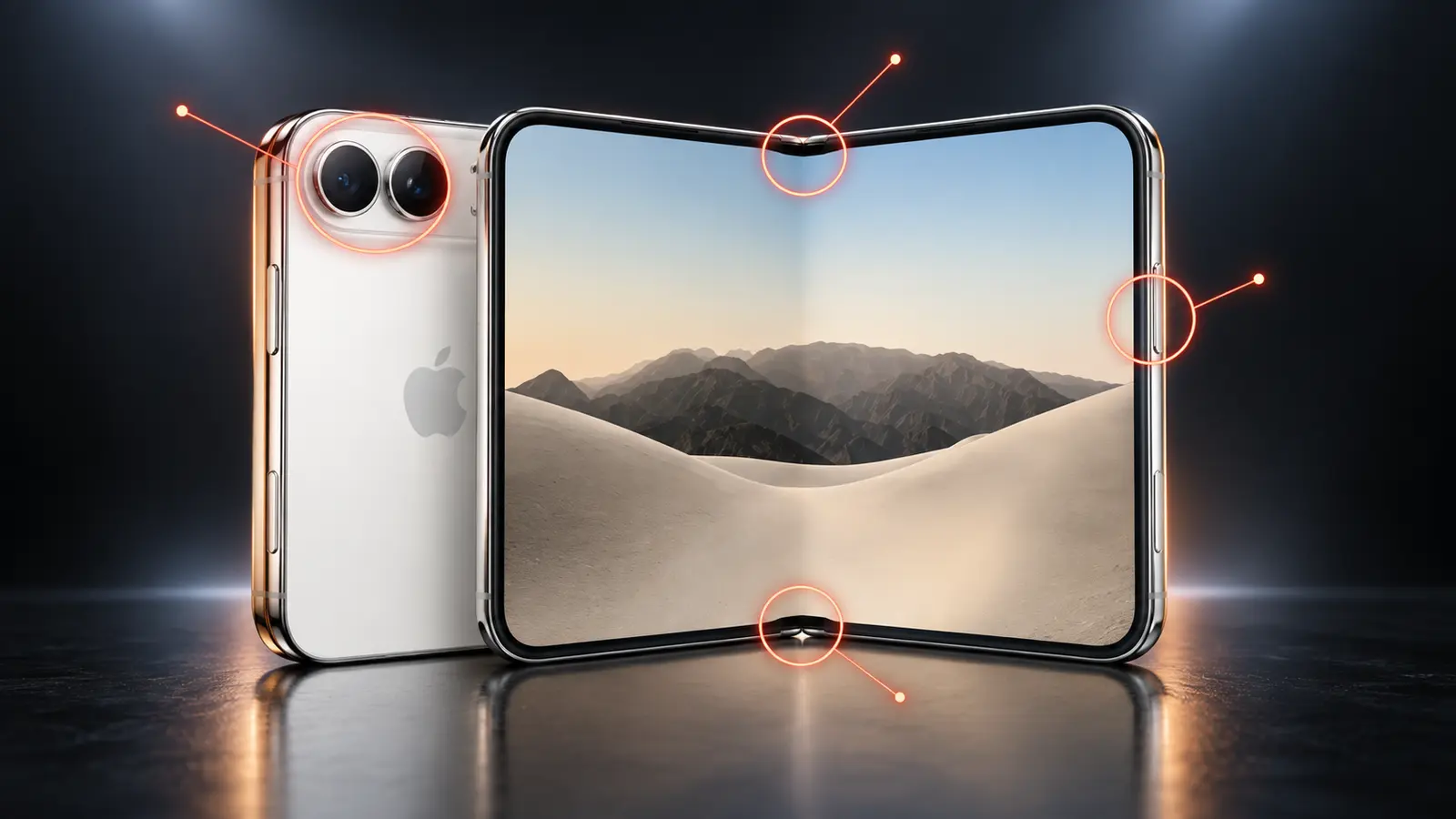
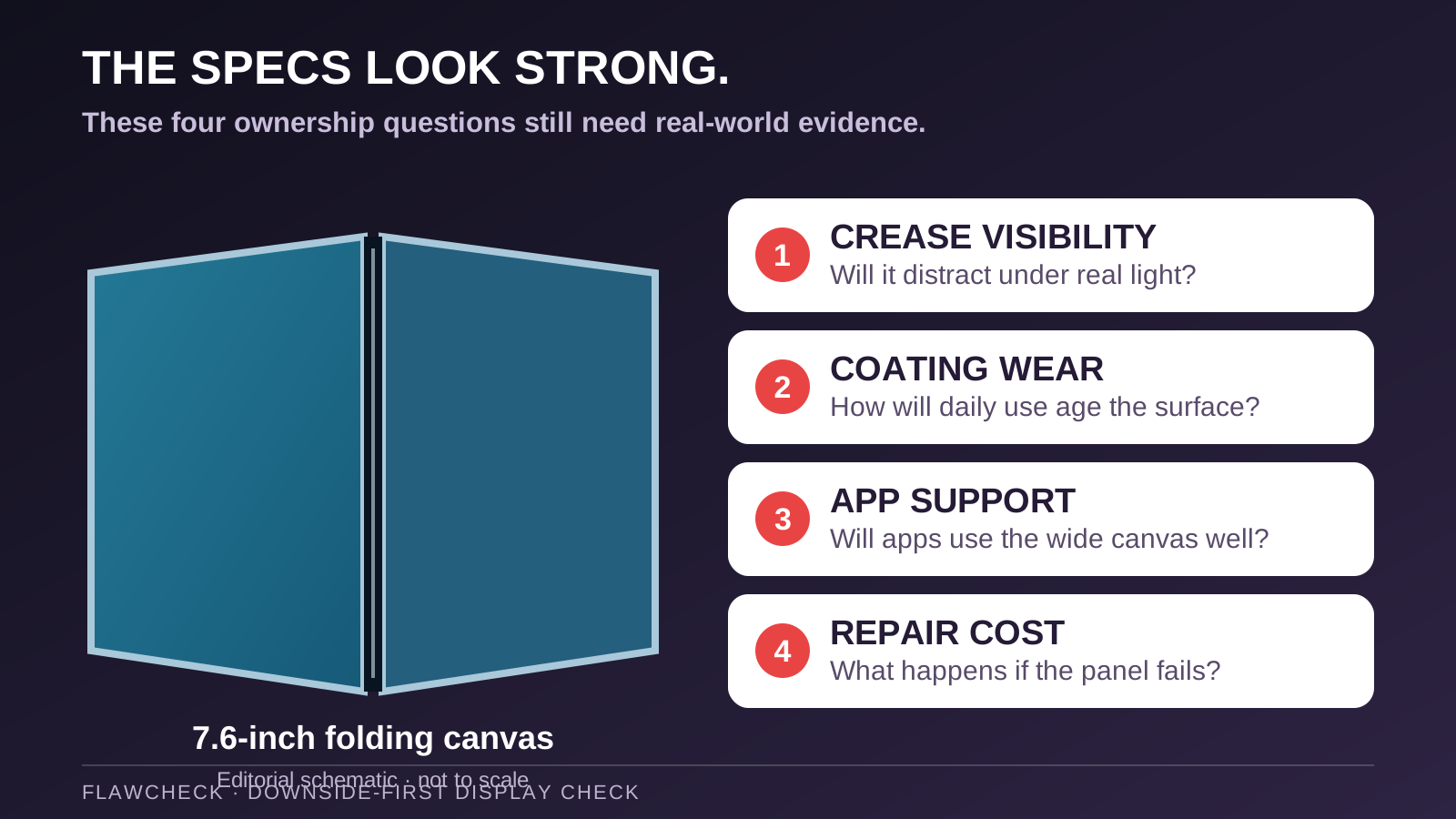
Buyers considering Apple’s more radical new form factor should read our foldable iPhone first-generation risks. The hinge, flexible display, repair path and app continuity create a different and potentially larger first-generation risk profile.
If you want the largest conventional flagship, see iPhone 18 Pro Max vs iPhone 17 Pro Max before assuming the newest Max is automatically worth the replacement cost.
For ownership risks that apply beyond this model, our IP68 versus water-damage warranty guide explains why a resistance rating and liquid-damage coverage are different questions, while our titanium vs aluminum vs stainless steel guide explains why enclosure material alone cannot determine durability or repairability.
Camera hardware and camera rendering are separate upgrade questions. The iPhone 18 Pro variable-aperture analysis identifies the low-light, depth-of-field, video-transition and reliability evidence still needed for the new mechanism. Our guide to why iPhone photos look overprocessed explains which native controls can influence tone and exposure, why ProRAW is not a zero-processing file, and when an alternative capture pipeline may make more sense than buying a new phone.
Sources and disclosure
Launch facts were checked against post-event reporting from Reuters and Associated Press. FlawCheck distinguishes announced specifications from independently measured results and will replace secondary sourcing with direct Apple technical documentation where appropriate as stable post-launch pages are available.
FlawCheck has not handled or tested a retail iPhone 18 Pro. No claim in this article should be read as a laboratory finding. See our methodology, editorial policy and corrections policy.