The Fairphone Gen 6+ is one of the easiest modern smartphones to repair, but repairable does not mean best value. Its €649/$649.99 price buys a mid-range processor, average cameras, IP55 protection, 27W charging, and no wireless charging. Buy it for long-term ownership and right-to-repair—not for flagship hardware.
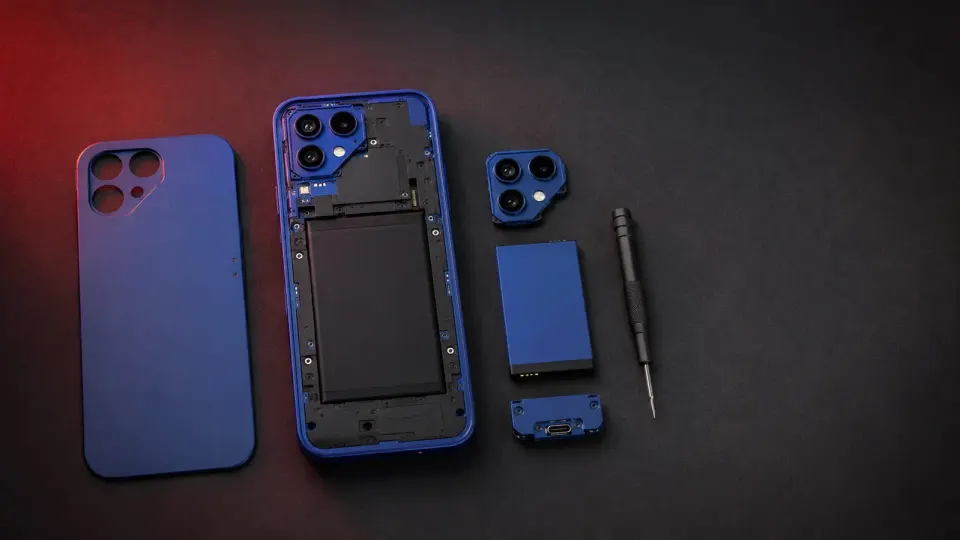
Image disclosure: The hero is a Downside concept illustration of a modular smartphone, not an official Fairphone product photograph.
The Fairphone Gen 6+ makes a persuasive promise: instead of replacing an entire phone when the battery weakens, the USB-C port wears out, or the screen breaks, replace the failed part yourself and keep going. Fairphone backs that idea with 12 replaceable modules, a five-year warranty, official spare parts, and software support through 2033.
That is not greenwashing dressed up as a spec sheet. The repairability advantage is real. The uncomfortable question is whether it is enough to justify paying €649 or $649.99 for hardware that otherwise behaves like a mid-range phone.
For many buyers, the answer is no. The Gen 6+ is commendable as an industry statement, but it asks you to accept weaker performance, cameras, charging, and water protection today in exchange for easier repairs tomorrow.
Fairphone Gen 6+ evidence snapshot — not scored yet
| Area | What the evidence currently supports | What still needs structured review |
|---|---|---|
| Performance | Snapdragon 7s Gen 4 is firmly mid-range; published testing indicates only a modest uplift over Gen 6 | Normalize sustained-performance evidence and approve ownership impact |
| Camera | No optical telephoto; independent reviews identify weaker low-light consistency than camera-focused rivals | Normalize matched camera evidence before assigning a category score |
| Display | 6.31-inch adaptive 10–120Hz LTPO OLED is a clear hardware strength | No numeric score until the Scorecard workflow is approved |
| Battery and charging | Replaceable 4,415mAh battery; 27W charging; published full-charge time around 80–85 minutes | Normalize endurance evidence across comparable test methods |
| Build and protection | Twelve replaceable modules and IP55 protection are documented | Human review must weigh repairability against weaker immersion protection |
| Longevity | Five-year warranty, parts access and support through 2033 materially improve ownership prospects | Ownership-impact band still requires structured approval |
| Value | €649 price includes a repairability and ethics premium over mainstream mid-range hardware | Value score remains withheld until the evidence workflow is complete |
Score status: not scored. FlawCheck has useful evidence for this product, but it has not yet completed the structured Evidence Record → human review → approved Scorecard pipeline required for a numeric rating.
Key flaws before you buy
- You are paying near-premium money for mid-range speed.
- The camera system has no optical telephoto lens and remains average in difficult light.
- IP55 is splash resistance, not protection against submersion.
- A full wired charge takes about 80–85 minutes; wireless charging is absent.
- The “up to two days” battery claim is more optimistic than independent mixed-use results.
- Android 16 was already behind the latest Android release when the phone launched.
- The 9.6mm body is noticeably thick by current smartphone standards.
- Existing Fairphone Gen 6 owners get too little new hardware to justify upgrading.
1. The €649 price buys ideals—not flagship performance
Use the Snapdragon task-based upgrade framework to identify a workload that warrants replacing a phone. Fairphone’s 7s Gen 4 sits outside the flagship dataset, so those scores cannot establish this model’s performance or override its repairability and support trade-offs.
The Snapdragon 7s Gen 4 and 12GB of DDR5 RAM are sensible upgrades over the previous Fairphone. Apps should feel responsive, multitasking has plenty of memory headroom, and light gaming is realistic.
But the word Plus can create the wrong expectation. Independent testing found the new chip only about 6–10% faster than the Gen 6’s Snapdragon 7s Gen 3. It remains substantially slower than current flagship silicon from Apple, Google, and Samsung.
This creates the central value problem. A buyer evaluating raw performance per dollar will see a €649 phone competing with discounted flagships and camera-focused mainstream models. Fairphone is charging for repairability, labor standards, spare-parts availability, and a smaller production scale—not for benchmark leadership.
That premium may align with your values. It should still be recognized as a premium.
2. The camera is adequate when the price demands excellent
The rear system combines a 50MP Sony Lytia 700c main camera with a 13MP ultrawide. There is no dedicated telephoto camera, so zoom beyond the main sensor relies on cropping and digital processing.
In good light, the main camera can produce attractive photos. Software updates inherited from the Gen 6 have improved earlier inconsistencies, and a 2x crop can be usable. The weaknesses appear when conditions become harder:
- Low-light detail and exposure are less dependable than on camera-focused rivals.
- The ultrawide cannot match the main camera’s quality.
- Moving subjects demand more care.
- There is no optical telephoto option for portraits, events, or distant subjects.
- Camera hardware is largely carried over from the cheaper Gen 6.
This is not a bad camera. It is an average camera attached to a phone with a price that invites above-average expectations.
If photography matters more than modular repair, compare this compromise with our Google Pixel 11 Pro downside review, where stronger computational photography comes with its own performance, heat, and charging trade-offs.
3. “Water resistant” sounds stronger than IP55 really is
Fairphone advertises water resistance and military-grade drop testing. The construction may be tougher than its removable panels suggest, but its official water rating is only IP55.
The first 5 indicates limited dust protection. The second 5 covers water jets. It does not mean the phone is certified to survive immersion. A dropped phone in a sink, pool, bath, or deep puddle is outside the protection buyers commonly associate with IP67 or IP68 flagships.
There is a legitimate engineering trade-off here: a device designed to open for repair is more difficult to seal for repeated submersion. Fairphone chose accessibility over maximum sealing. That is understandable, but the marketing phrase “water resistant” needs this qualification beside it.
4. The battery is replaceable, but not exceptional before replacement
The 4,415mAh battery is one of the Gen 6+‘s best ownership features. Fairphone rates it to retain at least 80% capacity after more than 1,000 cycles, and an official replacement costs far less than replacing the whole phone.
Yet replaceability should not be confused with class-leading runtime. Fairphone advertises up to 53 hours or two days, based on controlled internal testing. An independent mixed-use test achieved roughly a day and a half with about five hours of active screen use across Wi-Fi and 5G. Many users will still charge nightly.
Charging is similarly unremarkable:
| Charging claim | Practical meaning |
|---|---|
| 27W, 30W peak | Slower than many mid-range Android competitors |
| 50% in 30 minutes | Useful for a short top-up, not category-leading |
| 100% in about 85 minutes | Long enough to notice if you forget an overnight charge |
| Charger not included | You need a compatible USB-PD/PPS adapter for the advertised speed |
| Wireless charging | Not supported |
The removable battery is the long-term win. Daily charging is merely acceptable.
5. Long software support starts one version behind
Fairphone promises support through 2033 and six Android OS upgrades. Combined with the replaceable parts, that policy is one of the strongest reasons to buy the phone.
However, the Gen 6+ launched with Android 16 while Android 17 was already current. Long support is valuable, but starting behind consumes part of the perceived advantage and raises an obvious question: how quickly will a smaller manufacturer deliver each major update over the next seven years?
The software itself is refreshingly clean. Fairphone adds its diagnostics and support app, a local gallery, and the physical Moments switch for a minimalist interface without burying Android under heavy visual changes. A more private /e/OS version is also available, but it costs more and sacrifices the convenience and compatibility of standard Google services.
6. Repairability does not automatically make every repair effortless
The Fairphone is dramatically easier to service than a glued-shut mainstream flagship. Battery, display, cameras, loudspeaker, earpiece, USB-C port, and other modules can be replaced using a T5 Torx screwdriver.
Still, it is not the tool-free removable battery experience older phone users may remember. The back comes off, but battery removal involves screws. Repairs require careful handling, ordering the correct module, transferring parts where instructed, and accepting that user damage during repair may not be covered by warranty.
The more important limitation is economic: repairability saves money only if you actually keep the phone. If mediocre camera quality or performance convinces you to upgrade after two years, the modular design never gets the chance to repay its premium.
7. The thick body is the physical cost of modularity
At 156.57 × 73.28 × 9.6mm and 193g, the Gen 6+ is not excessively heavy, but it is thick. The plastic construction and visible modular seams prioritize service access rather than the dense, glass-and-metal feel expected from many €649 phones.
That trade-off can be positive. Plastic is less likely than rear glass to shatter, and a replaceable cover is more useful than a permanently bonded fashion panel. Buyers should simply know that the phone communicates practicality rather than luxury.
The screen is the exception. Its 6.31-inch LTPO AMOLED panel offers an adaptive 10–120Hz refresh rate, 1116 × 2484 resolution, HDR10, and up to 1,400 nits automatic brightness. It is a strong, sensibly sized display and one of the least compromised parts of the package.
8. The Gen 6+ is a poor upgrade for Gen 6 owners
Fairphone released the original Gen 6 only about a year before the 6+. The new model changes three headline items: Snapdragon 7s Gen 4 instead of Gen 3, 12GB rather than 8GB RAM, and an additional cobalt-blue color.
Almost everything else—including display, battery, cameras, dimensions, repair modules, and software features—remains compatible or effectively the same. That restraint is good for the environment and spare-parts ecosystem. It also makes the upgrade case extremely weak.
If your Gen 6 works, replacing it with the 6+ contradicts the entire longevity argument. Keep the phone you already own.
Marketing vs reality
| Fairphone message | Downside reality check |
|---|---|
| “Up to two days of battery life” | Possible under Fairphone’s lab methodology; independent mixed use suggests about a day and a half |
| “More power. More performance.” | A useful update, but still mid-range and only modestly faster than Gen 6 |
| “Water resistant” | IP55 tolerates rain and jets, not immersion |
| “Built to last” | Mechanically convincing, provided the mid-range performance and camera still satisfy you years later |
| “Plus more” | Mainly a chip-and-RAM refresh; most hardware is unchanged |
What the Fairphone Gen 6+ genuinely gets right
A downside-first review should not invent flaws where the product deserves credit. Fairphone proves that a modern phone can offer a good OLED display, 5G, eSIM, microSD expansion, a replaceable USB-C port, and a removable battery without becoming an unusable science project.
The five-year warranty is unusually confident. Official replacement pricing—about €39.95 for a battery, €89.95 for a screen, and €19.95 for a USB-C port at publication—makes long ownership economically plausible. Fairphone also says 51% of the device’s weight uses fair or recycled materials and publishes information about labor and environmental programs.
These benefits are meaningful. They just solve a different problem from faster chips and better cameras.
Who should buy it?
Buy the Fairphone Gen 6+ if all of the following sound like you:
- You plan to keep a phone for at least five years.
- You are willing to replace a battery, screen, or port yourself.
- Ethical sourcing and right-to-repair influence how you spend money.
- A clean, responsive mid-range Android experience is enough.
- You prefer microSD expansion over cloud-storage dependence.
Skip it if camera quality, gaming performance, fast charging, wireless charging, premium materials, or IP68 protection rank above repairability.
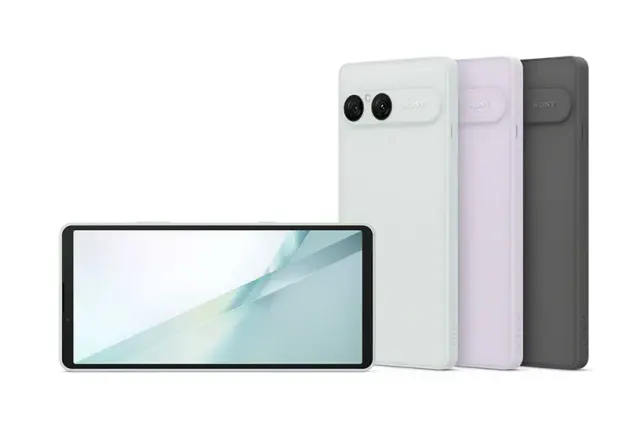
For a smaller conventional alternative, the Sony Xperia 10 VIII assessment trades Fairphone’s repair system for a lighter 6.1-inch design but still carries mid-range performance and support-policy questions. Buyers who prioritize IP68, optical zoom, wireless charging and a longer formal update promise should compare the Galaxy S26 FE downside review, while remembering that its $699 price and sealed construction create different ownership costs.
Downside verdict
The Fairphone Gen 6+ is easy to admire and difficult to recommend universally. It may be the most responsible smartphone purchase for a committed long-term owner, yet it is not the best phone available for €649 when judged by performance, cameras, charging, and water resistance.
Its value appears in year four—after a cheap battery replacement keeps it alive while another phone might be discarded. If you usually upgrade every two or three years, paying the Fairphone premium makes little sense. If you genuinely intend to repair rather than replace, it offers something almost no mainstream competitor does.
Score status: not scored. The buying verdict remains valid, but FlawCheck is withholding a numeric rating until the structured evidence and human-review workflow is complete.
For a broader five-year decision, compare Fairphone with Pixel, iPhone and eligible Galaxy models in our guide to the best phones for long-term ownership. It separates software promises from battery access, repair cost and water-resistance trade-offs.
Browse more Tech product reviews and hidden drawbacks, or read our editorial methodology to see how Downside separates verified specifications, independent testing, and research-based judgments.
Sources and verification
- Fairphone Gen 6+ official product page
- Fairphone Gen 6+ launch and support details
- The Guardian independent Fairphone Gen 6+ review
- WIRED report on US availability and replacement-part pricing
- Fairphone replacement battery listing
Editorial disclosure: FlawCheck has not physically tested this phone. This research-based review cross-checks manufacturer specifications, repair and support documentation, current pricing, and independent hands-on testing. No affiliate commission influenced this assessment. Specifications, prices, and update policies may change after publication.
Editorial disclosure: FlawCheck did not physically test this product. This research-based assessment uses published specifications and available independent or attributable owner evidence. Verify current pricing, policies, compatibility, and product revisions before purchase.