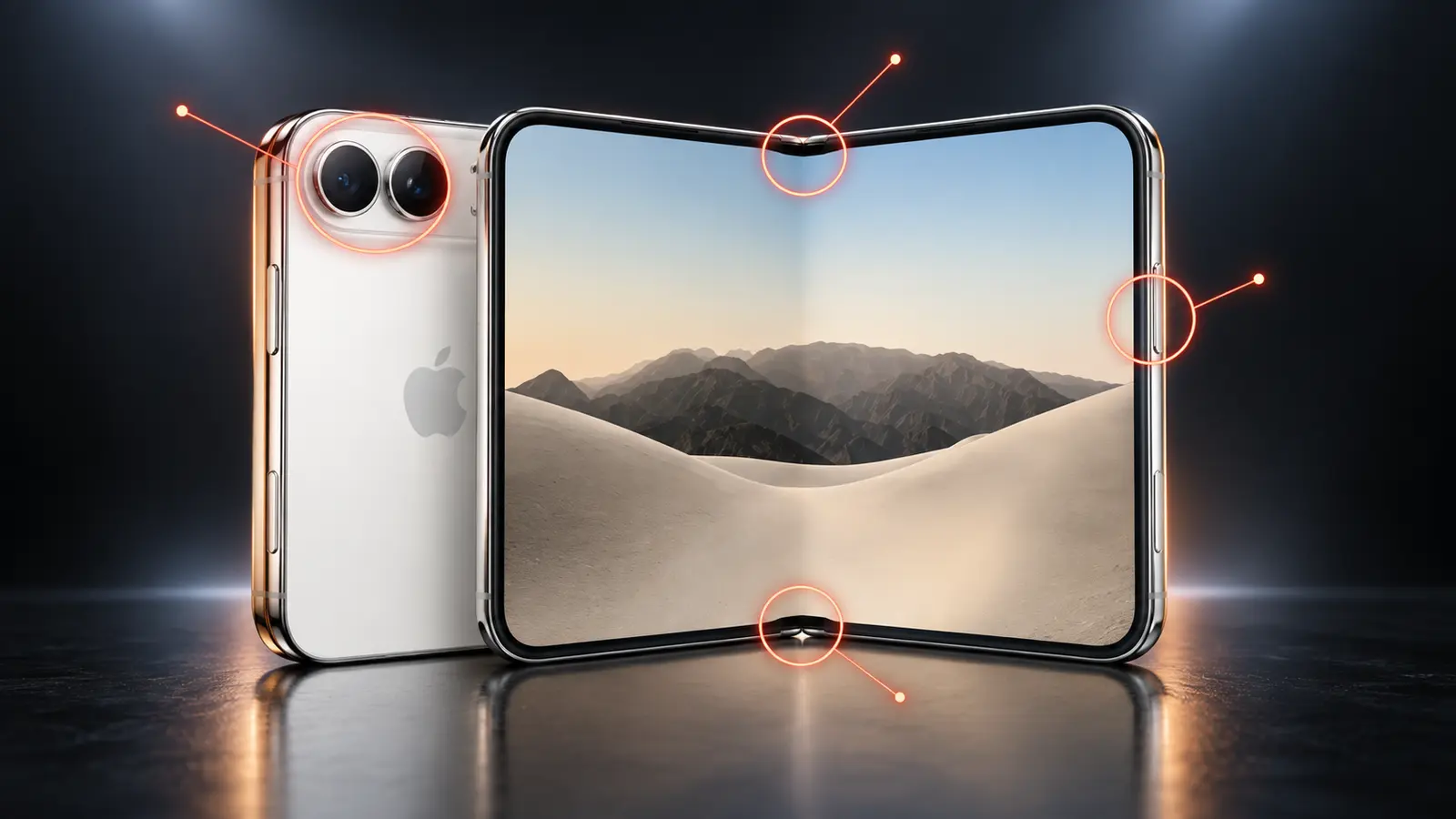
Post-launch evidence notice: iPhone Duo is official, but preorders do not begin until October 16 and availability begins October 23. Long-term ownership evidence does not yet exist. This article separates confirmed design facts from first-generation risks and remains not scored.
Apple’s first foldable is no longer a rumor. iPhone Duo starts at $1,999, opens to a 7.6-inch inner display, has a 5.4-inch outer display, uses A20 Pro and C2, supports Apple Pencil, and introduces a new iOS 27 experience for the folding form factor.
That makes it exciting. It also makes it exactly the kind of product FlawCheck should evaluate cautiously: expensive, mechanically novel and without years of owner evidence.
| Confirmed fact | Buyer-risk question |
|---|---|
| $1,999 starting price | How expensive will repair and depreciation be? |
| 7.6-inch flexible inner display | How will it age under repeated folding and daily abrasion? |
| Precision hinge | How does it behave after months of dust, drops and thousands of cycles? |
| A20 Pro + vapor chamber | Can the thin unfolded chassis sustain performance comfortably? |
| Dual-battery architecture | What is mixed-use endurance across both screens? |
| iOS 27 foldable interface | How consistently do third-party apps adapt? |
| October 23 availability | There is no long-term owner evidence yet |
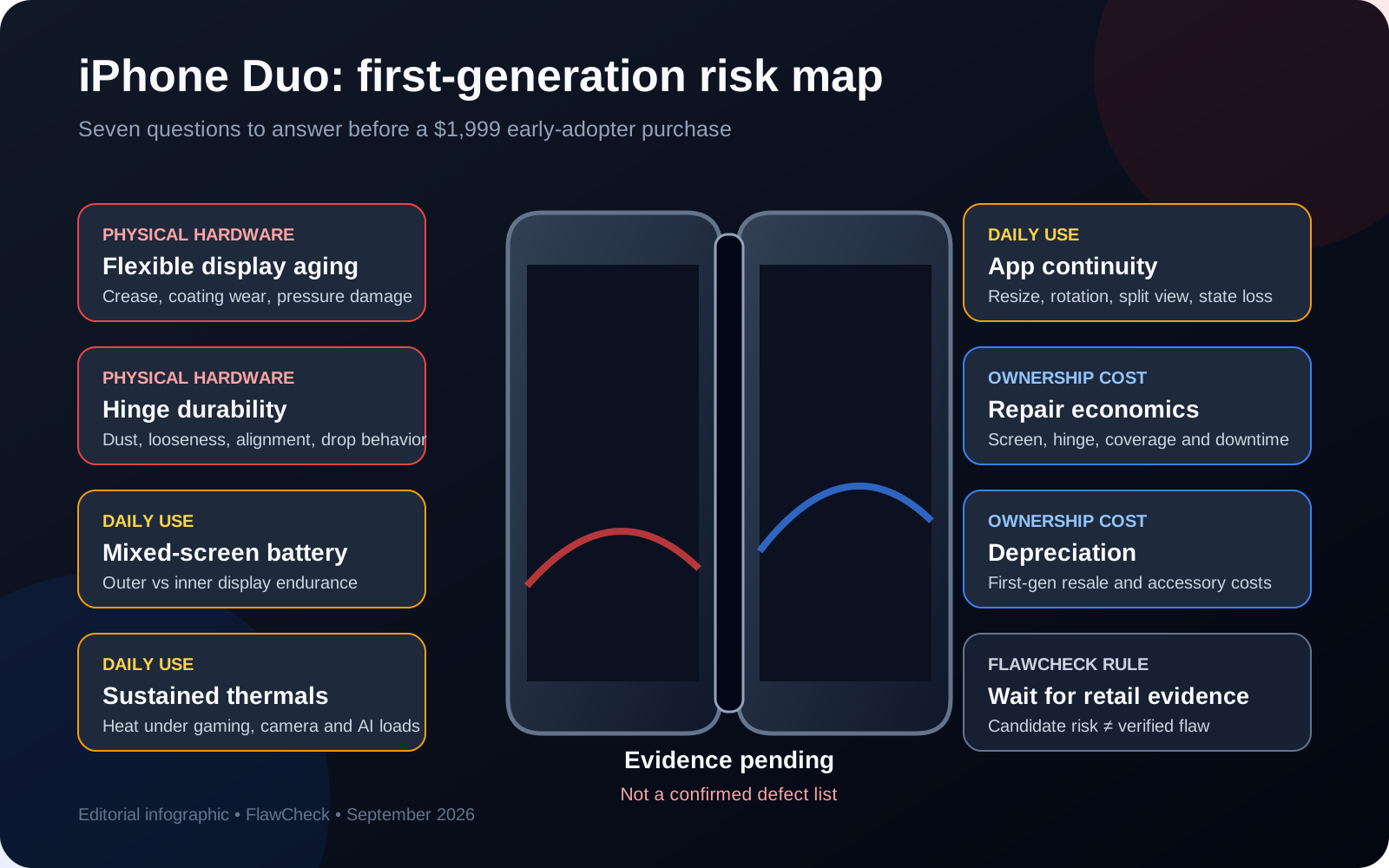
Risk priority matrix
| Risk area | Why it matters at $1,999 | Earliest useful evidence | Current status |
|---|---|---|---|
| Flexible display | The inner screen is both the core benefit and a wear surface | Abrasion, crease and pressure testing on retail units | Evidence pending |
| Hinge | A new mechanical system creates failure modes absent from normal iPhones | Dust, cycle, drop and alignment testing | Evidence pending |
| Repair economics | One display or hinge repair could materially change total ownership cost | Official out-of-warranty and AppleCare pricing | Evidence pending |
| Mixed-screen battery | Endurance depends on how often the 7.6-inch display is used | Repeatable inner/outer-screen mixed-use tests | Evidence pending |
| App continuity | Poor resizing or state preservation can waste the larger screen | Retail software tests across common third-party apps | Evidence pending |
| Sustained thermals | A thin foldable must cool A20 Pro across unusual geometry | Long gaming, camera and export workloads | Evidence pending |
| Depreciation | First-generation demand and repair anxiety may affect resale | Used-market pricing after several months | Too early |
1. $1,999 makes first-generation uncertainty expensive
Duo is Apple’s most expensive iPhone entry point. At this price, a small ownership compromise carries more weight than it would on an experimental midrange device.
Buyers should budget beyond MSRP: AppleCare terms, screen or hinge repair, cases, accessories and depreciation can materially change total ownership cost. Until official repair pricing and credible teardown evidence mature, the economic downside remains unusually uncertain.
2. The flexible display is still a wear surface
Apple describes a durable foldable design and uses a special inner-display finish, but a flexible screen operates under different mechanical conditions from conventional cover glass.
The evidence we want is not a launch demonstration. It is months of folding, pocket debris, fingernail contact, pressure, temperature changes and ordinary cleaning. Crease visibility, coating wear and impact sensitivity should be evaluated over time. If the factory film begins lifting, use our foldable screen-protector decision guide before assuming it is safe to peel or replace at home.
3. The hinge creates a new failure domain for iPhone owners
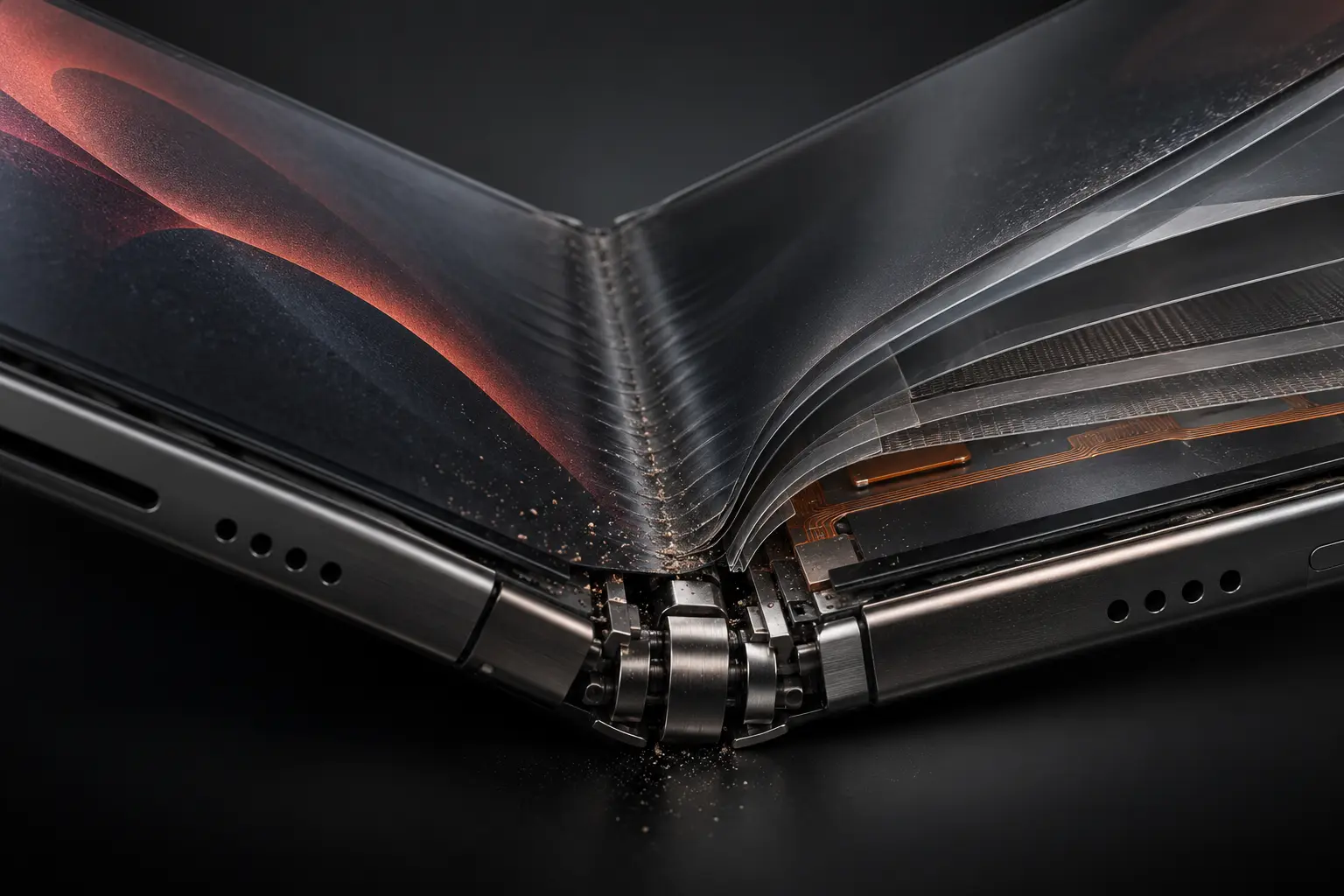
The precision hinge is central to the product. It is also a mechanical system that conventional iPhones do not need.
A meaningful durability assessment should examine looseness, alignment, debris ingress, intermediate-angle stability and behavior after repeated cycles. Apple’s claims can establish design intent; only long-term evidence can establish aging behavior.
4. Thin when open does not automatically mean comfortable under load
Duo uses A20 Pro with a custom vapor chamber. Apple says the platform improves sustained performance, but the unusual chassis and dual-display design make independent thermal testing especially important.
Gaming, multitasking, camera use and AI workloads should be tested for surface temperature, sustained clocks and battery consumption. A fast foldable that becomes uncomfortable during prolonged use is a different ownership proposition from a conventional Pro phone.
5. Battery life has to cover two very different usage modes
Duo’s dual-battery architecture powers a compact outer screen and a much larger 7.6-inch inner display. Usage patterns can therefore vary more than on a conventional phone.
A buyer who mostly uses the outer screen may see very different endurance from someone who unfolds constantly for multitasking, video or Apple Pencil work. Independent testing needs to disclose the screen-use mix rather than publish one battery number as universal.
6. The camera system should be judged against the $1,999 price, not only other foldables
Foldable engineering competes for internal space. Buyers paying $1,999 should check whether the camera experience matches their expectations for Apple’s most expensive phone, especially in zoom, low light, moving subjects and long video sessions.
Duo’s form factor enables novel camera interactions, but novelty does not erase conventional image-quality expectations.
7. App continuity is part of hardware quality now
Apple controls iOS 27 and can optimize its own apps, but a foldable succeeds or fails partly on third-party software. Rotation, resizing, split-screen behavior, keyboard layouts and state preservation when moving between screens all matter.
This is a category where early buyers may discover edge cases that specifications cannot reveal. The safest evidence comes after developers and users have spent time with shipping hardware.
Who should wait?
Wait if $1,999 is a major purchase for you, you keep phones for many years, you are sensitive to display wear, you depend on a specific professional app, or you would be frustrated by first-generation repair or accessory uncertainty.
Buying early is easier to justify if the foldable form factor itself solves a real need and you accept that some long-term questions cannot be answered before launch.
Verdict
Duo may be transformative without being the safest iPhone purchase. Apple’s first foldable combines a high price with a new hinge, flexible display, dual-screen software model and limited long-term evidence.
That is not proof of a flaw. It is a concentration of ownership risks that still need evidence.
If flexible-display aging is your main concern, start with the focused iPhone Duo foldable-display risk audit. If camera reach matters more, the iPhone Duo vs iPhone 18 Pro camera comparison tests the cost of choosing the fold over dedicated telephoto hardware. For the wider market decision, our iPhone Duo vs Galaxy Z Fold7 vs Pixel 11 Pro Fold comparison maps switching costs and buyer profiles.
Compare that uncertainty with the more conventional iPhone 18 Pro downside review and use our iPhone 18 upgrade guide before assuming Apple’s most expensive iPhone is automatically its best fit for you.
Our IP68 vs water-damage warranty guide also explains why a resistance rating does not mean liquid damage will necessarily be covered under warranty.
Evidence gates before scoring
| Evidence gate | What would count | What does not count |
|---|---|---|
| Display durability | Repeatable retail-unit wear tests and multi-month owner evidence | Launch-stage durability language alone |
| Hinge reliability | Cycle, dust, drop and alignment evidence tied to this model | Results from another foldable or a prototype |
| Battery | Disclosed inner/outer-screen mix under comparable settings | One video-loop number without usage context |
| Thermals | Sustained performance, surface temperature and power data | A short peak benchmark |
| Apps | Named-app continuity tests across folded and unfolded states | Apple’s own optimized-app demonstration |
| Repair cost | Official model-specific service and coverage terms | Assumptions based on conventional iPhones |
| Camera value | Matched scenes against similarly priced flagships | Curated keynote samples |
FlawCheck will keep Duo not scored until adequate evidence exists for flexible-display aging, hinge durability, mixed-use battery endurance, sustained thermals, third-party app continuity, camera behavior and repair economics. Candidate risks should not be promoted to verified flaws without human-reviewed evidence.
Sources and disclosure
Official product facts, pricing and October availability were checked against Apple’s September 9, 2026 iPhone Duo announcement. FlawCheck has not handled or tested a retail iPhone Duo and does not present first-generation risk hypotheses as confirmed defects.

Written by FlawCheck Editorial Desk
Editorial ResearchFlawCheck's editorial desk is responsible for source review, claim labeling, buyer-risk analysis, publication updates, and corrections. Current articles are research-based unless a documented hands-on method is explicitly provided.
Related Reviews and Buying Risks
View All Reviews →
Apple iPhone 18 Pro
"The iPhone 18 Pro is now a confirmed $1,199 flagship with meaningful hardware changes, but launch specifications do not prove that those changes improve ownership enough to justify upgrading. Wait for independent battery, thermal, camera and C2 modem testing if your current phone still works well."
"Starts at $1,199 in the US"
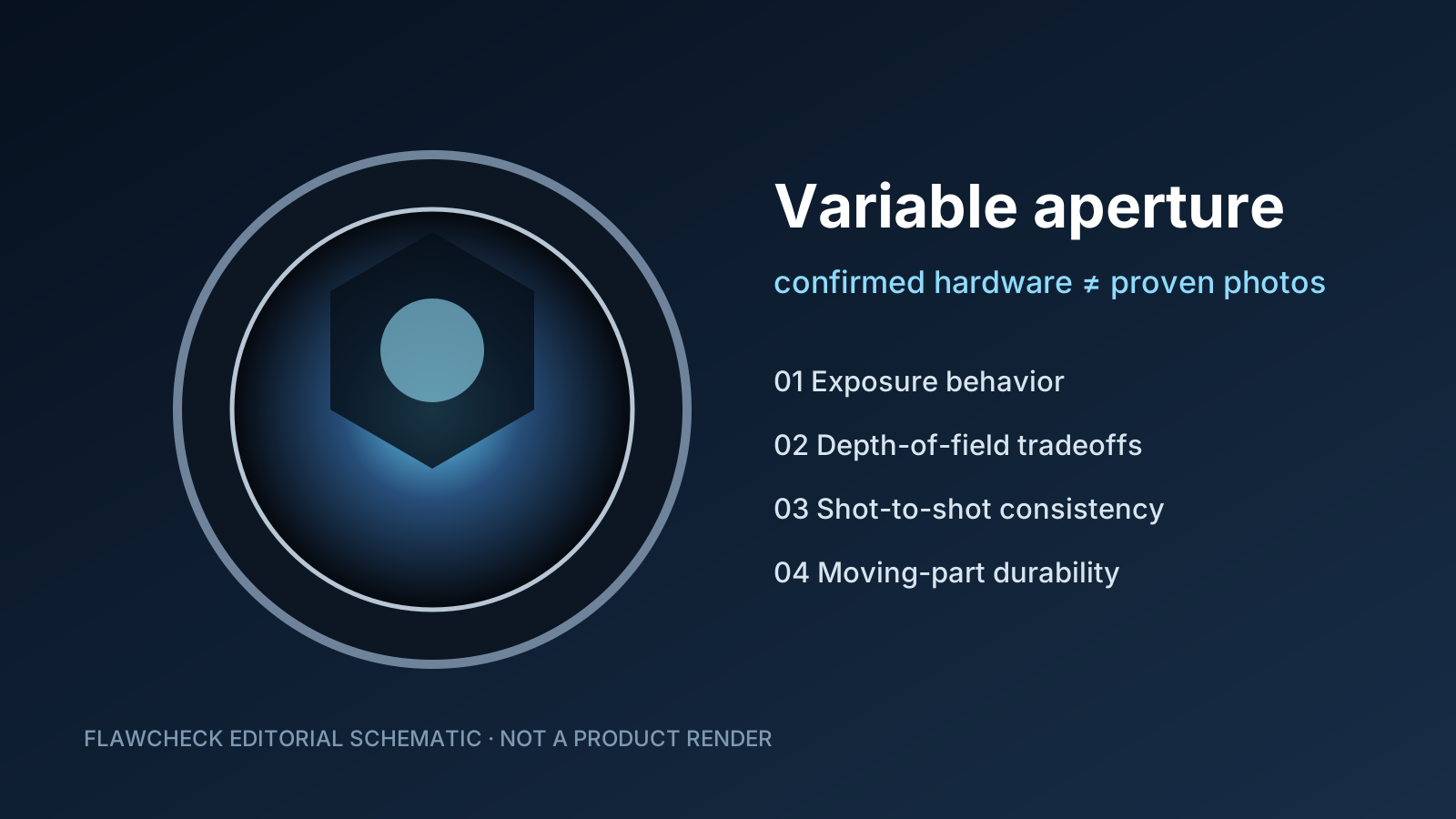
Apple iPhone 18 Pro camera
"Variable aperture gives the iPhone 18 Pro another physical control, but an extra control is not automatically a better photograph. Buyers should wait for repeatable retail comparisons against iPhone 17 Pro and current flagships, especially in low light and video."
"Real-world benefit is not established by the specification"
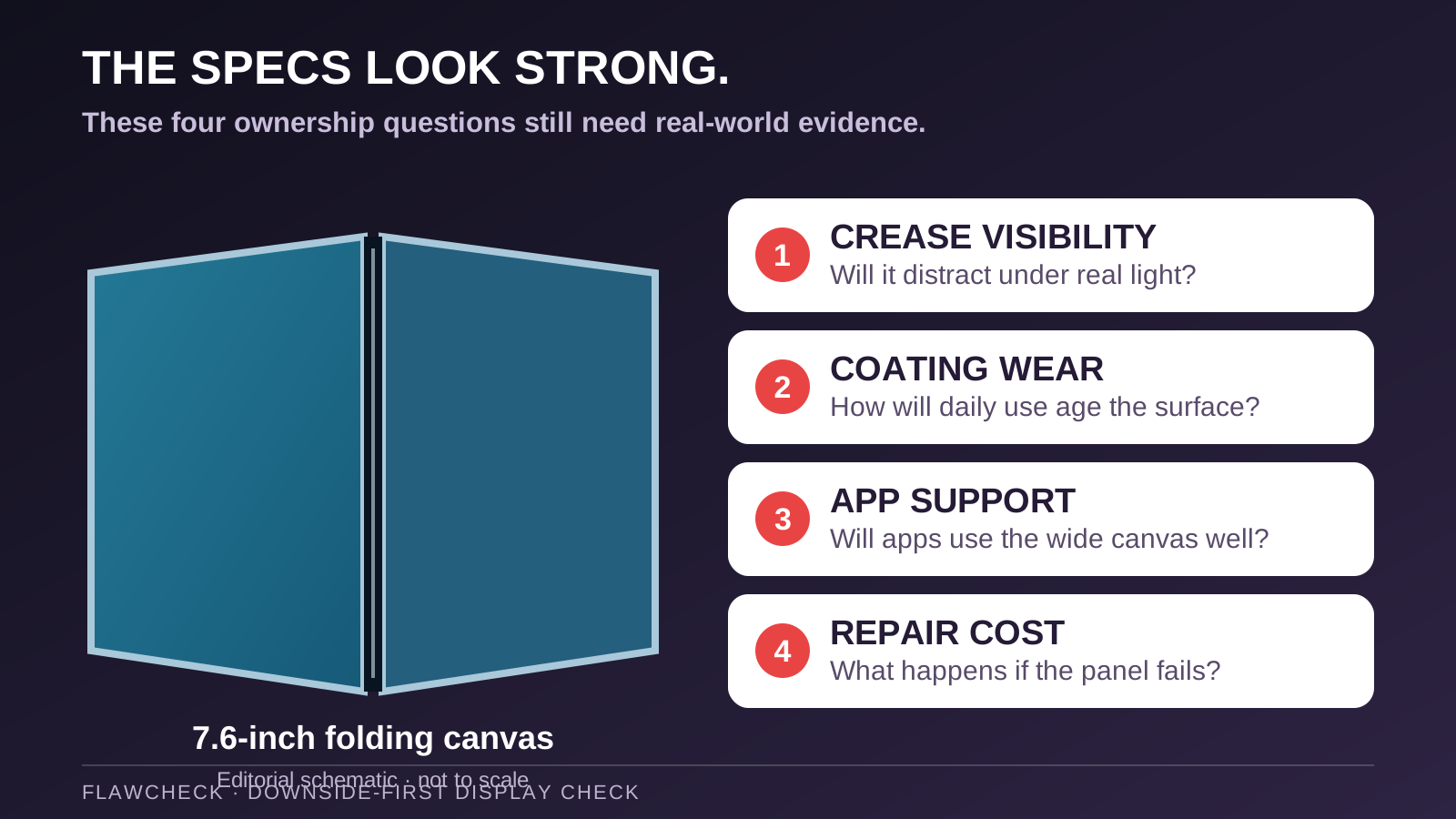
Apple iPhone Duo display
"The iPhone Duo display has strong confirmed specifications, but its most important ownership questions are time-dependent. At $1,999, wait for retail crease, abrasion, app-continuity and repair evidence unless the large folding canvas outweighs first-generation uncertainty."
"Flexible-display aging cannot be established before retail use"