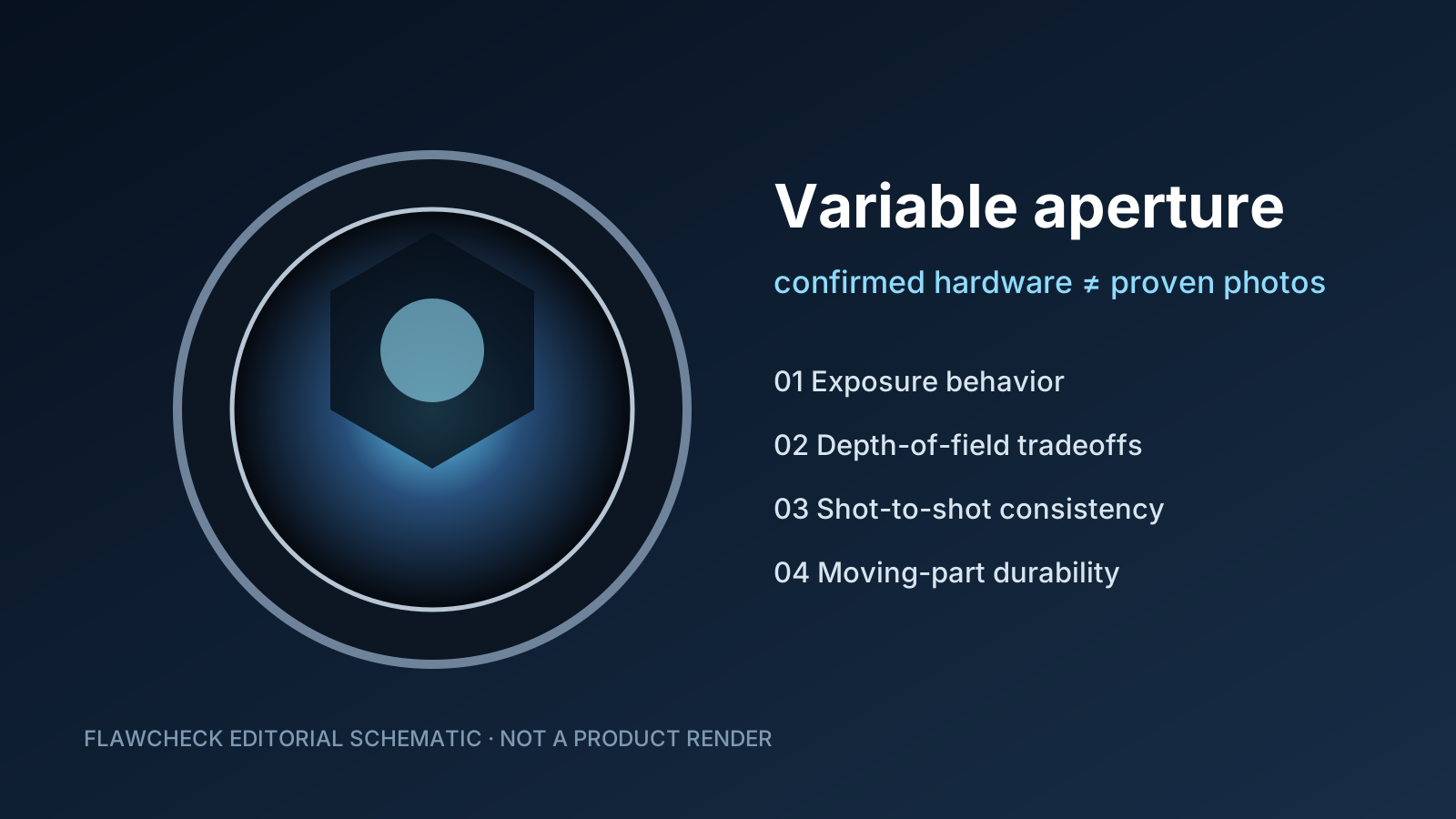
Don't Buy Apple iPhone 18 Pro camera If...
If any of these conditions apply to your use case, save your money or look at alternatives.
- iPhone 17 Pro owners upgrading on the camera specification alone
- Buyers who assume variable aperture guarantees better night photos
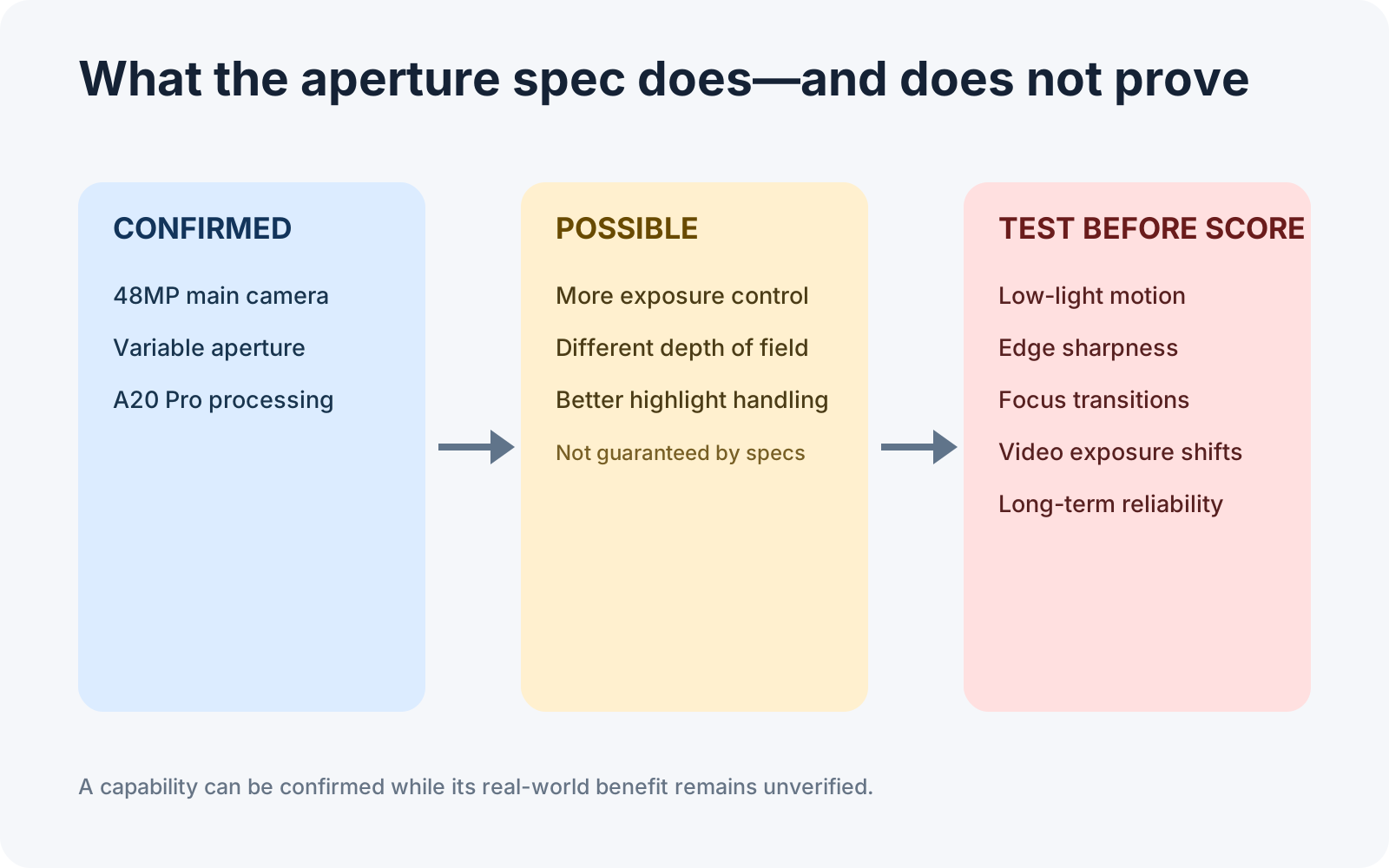
Evidence status — September 10, 2026: Apple confirms a 48MP Fusion main camera with variable aperture. FlawCheck has not tested a shipping retail unit. Possible benefits and failure modes below are hypotheses to test, not findings. This article is not scored.
The interesting part of the iPhone 18 Pro camera is not another megapixel number. It is that Apple has added a physical variable aperture to the main camera.
That can be useful. It can also be oversold. A wider opening can admit more light; a narrower opening can alter depth of field and may help the lens in bright conditions. But phone photography is a chain: optics, sensor, stabilization, exposure decisions, multi-frame processing and subject movement all interact. One new link does not prove the final result is better.
Confirmed facts versus open questions
| Claim | Evidence status | Downside-first interpretation |
|---|---|---|
| 48MP Fusion main camera | Confirmed by Apple | Resolution alone does not establish detail after processing |
| Variable aperture | Confirmed by Apple | The useful aperture range and automatic switching behavior must be tested |
| A20 Pro image processing | Confirmed by Apple | Processing quality, latency and consistency are not proven by the chip name |
| Better low-light photos | Not established | A wider aperture may gather light, but subject motion and multi-frame behavior matter |
| More natural depth of field | Not established | Benefit depends on distance, focal length, aperture choice and edge rendering |
| Durable mechanism | Not established | No defect is assumed; cycle, impact and long-term evidence are still missing |
The first downside: another automatic decision can be another inconsistent decision
Most owners will leave the camera in automatic mode. The meaningful question is therefore not whether a user can change aperture. It is whether the camera chooses predictably.
A useful review should repeat the same scene across bright sun, indoor light, backlight and night. It should record the selected aperture, shutter speed and ISO, then check whether faces, moving hands and fine textures remain consistent. One attractive sample proves very little.
Low light: more light is not the whole story
A wider aperture can help the exposure budget, but a phone can still blur a moving child or pet if the camera chooses a slow shutter. Multi-frame processing can also change texture, highlights and motion artifacts.
The correct comparison is not a single static night scene. It is a repeatable set containing stationary subjects, moving subjects, mixed lighting and bright signs. Results should be compared with the iPhone 17 Pro and a current flagship rival at matched framing, with original files retained.
Depth of field may help—or create new edge cases
A variable aperture can give the camera more control over what appears sharp. At phone-sensor scale, however, the difference may be subtle in some scenes and more visible at close focus. Hair, glasses, product edges and small text are useful stress cases.
Reviewers should separate optical depth of field from computational portrait blur. Otherwise a software mask can be mistaken for an optical result.
Video is the harder test
Still-image comparisons can hide transitions. Video exposes them. If the aperture changes during recording, reviewers should look for visible exposure steps, focus shifts, changes in corner rendering and audible mechanism noise in quiet scenes.
Tests should include walking from indoors to outdoors, panning across a bright window and recording a subject moving toward the lens. Until those transitions are measured, “more control” is a capability claim rather than an outcome.
iPhone 18 Pro versus iPhone 17 Pro: the useful comparison
| Decision area | iPhone 17 Pro baseline | iPhone 18 Pro question |
|---|---|---|
| Main-camera aperture | Previous fixed-aperture approach | Does variable aperture improve more scenes than it complicates? |
| Low-light motion | Known generation with mature testing | Are shutter choices and moving subjects measurably better? |
| Video consistency | Existing reference point | Are aperture transitions invisible and stable? |
| Upgrade value | Already capable for most owners | Is the difference visible without pixel-peeping? |
| Reliability | Conventional camera history | Does the moving mechanism remain aligned over time? |
This table intentionally avoids assigning unverified wins. The iPhone 17 Pro is the correct control because it shows whether the new mechanism changes outcomes—not merely whether iPhone 18 Pro can beat a weaker or differently tuned rival in one scene.
Who should wait for camera evidence?
Wait if the camera is your main reason to upgrade, you already own an iPhone 17 Pro, or you record long video clips where exposure changes must remain invisible. The broader iPhone 18 Pro downside review tracks battery, modem and thermal evidence beyond the camera; the iPhone 18 Pro vs iPhone 17 Pro comparison tests whether the full upgrade is meaningful. If you are considering Apple’s folding model instead, compare its camera hardware directly in iPhone Duo vs iPhone 18 Pro Camera, then use iPhone Duo vs Galaxy Z Fold7 vs Pixel 11 Pro Fold for the broader ecosystem decision.
A launch-stage sample gallery is not enough to settle the decision. Useful evidence needs matched scenes, identical framing, moving subjects, low light, exposure transitions and repeated video takes. The result should be judged by keeper rate and consistency, not by the single most impressive promotional frame.
Evidence gate before a Flaw Score
FlawCheck will not score this camera from launch materials. A defensible assessment needs:
- retail hardware and final public software;
- repeatable original-file comparisons;
- EXIF or equivalent exposure data;
- motion, low-light, close-focus and video-transition tests;
- more than one unit where mechanism consistency is in question;
- human review of crops and complete images, not a synthetic aggregate alone.
A20 Pro deserves the same restraint. Apple confirms the silicon, but a separate chip article would be thin until sustained performance, power and thermal data exist. Those results should first be added as evidence to the main iPhone 18 Pro downside review, not turned into a speculative benchmark page.
Bottom line
The variable aperture is a meaningful engineering change, not proof of a camera victory. If the iPhone 17 Pro already captures what you need, wait for matched retail tests. The downside-first question is simple: how often does the new mechanism rescue a difficult photo, and how often does it introduce a transition or consistency problem?
A new aperture changes the optical input, but it does not remove computational rendering. If your main complaint is crunchy texture, lifted shadows or a saved image that changes after capture, read why iPhone photos look overprocessed—and what you can actually control before treating new camera hardware as the solution.
Variable aperture changes how the main lens forms an image, but it should not be confused with every zoom label in the camera app. See optical-quality zoom vs optical zoom for the separate evidence test that distinguishes native focal length from a high-resolution sensor crop. If 2x is the buying question, our 2x crop and dedicated-telephoto guide explains the practical losses in low light, motion, portraits and longer reach.
Sources and disclosure
Confirmed specifications and launch timing were checked against Apple’s iPhone 18 Pro specifications and iPhone 18 Pro product page on September 10, 2026. Apple is the primary source for product facts, not for independent performance conclusions. FlawCheck has no affiliate relationship or pre-release access for this analysis.
Technical Specifications
Verified manufacturer specifications.
- Main camera
- 48MP Fusion with variable aperture
- Processor
- A20 Pro
Frequently Asked Questions
Direct answers to common buyer concerns and uncertainties.
Does variable aperture guarantee better photos?
No. It changes the optical input available to the camera system, but image quality still depends on lens behavior, sensor readout, stabilization, processing and the scene.
Is the aperture mechanism a confirmed durability problem?
No. Mechanical reliability is an evidence question, not a confirmed defect.
Why is this camera not scored?
A launch specification cannot establish consistency, image quality or long-term reliability. FlawCheck will wait for reproducible retail tests and human review.

Written by FlawCheck Editorial Desk
Editorial ResearchFlawCheck's editorial desk is responsible for source review, claim labeling, buyer-risk analysis, publication updates, and corrections. Current articles are research-based unless a documented hands-on method is explicitly provided.
Related Reviews and Buying Risks
View All Reviews →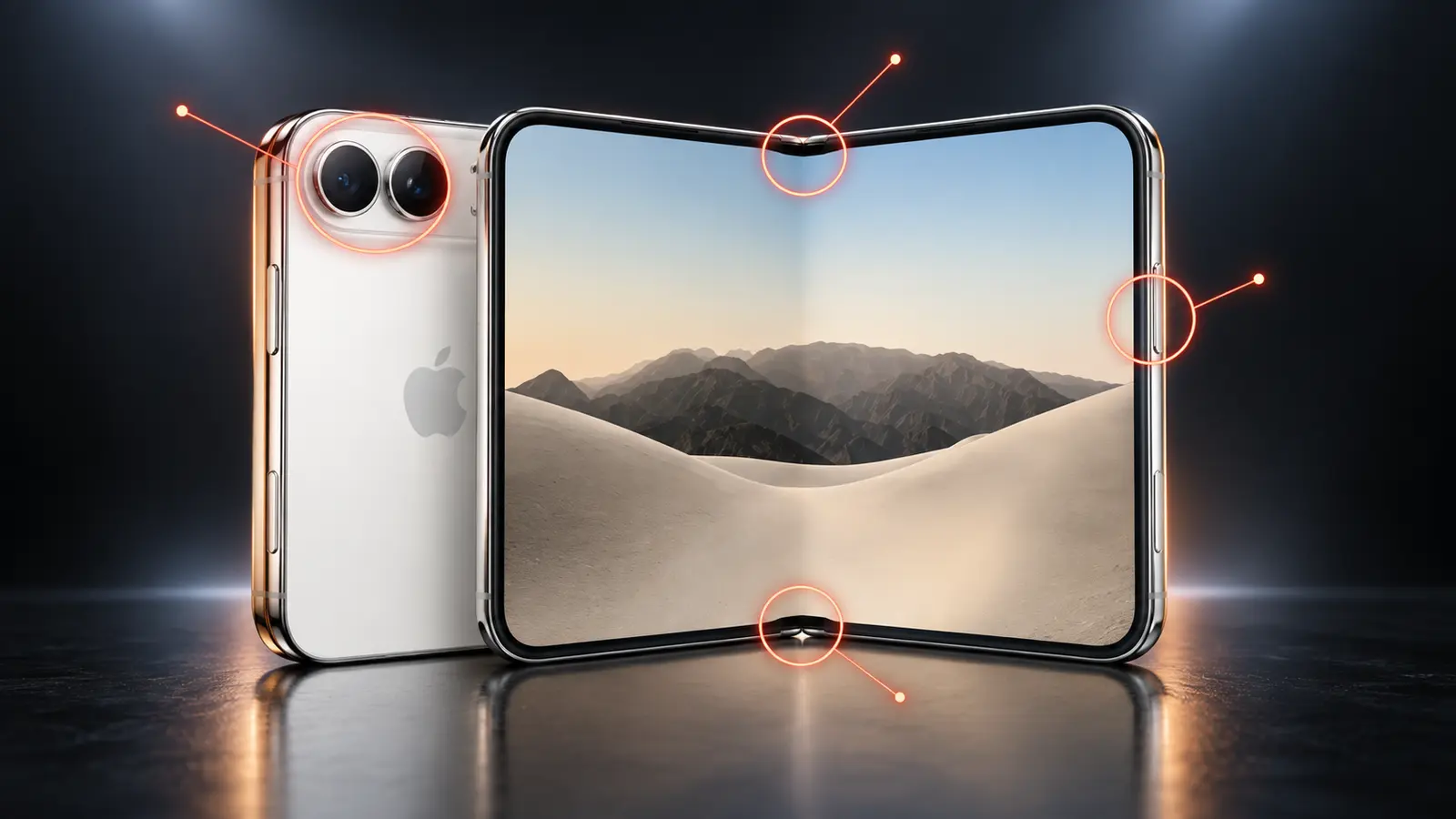
Apple iPhone Duo
"iPhone Duo is Apple's most ambitious iPhone redesign in years, but $1,999 is a high price to become an early adopter of Apple's first foldable. Wait for independent durability, battery, repair and app-continuity evidence unless the form factor itself is worth the uncertainty to you."
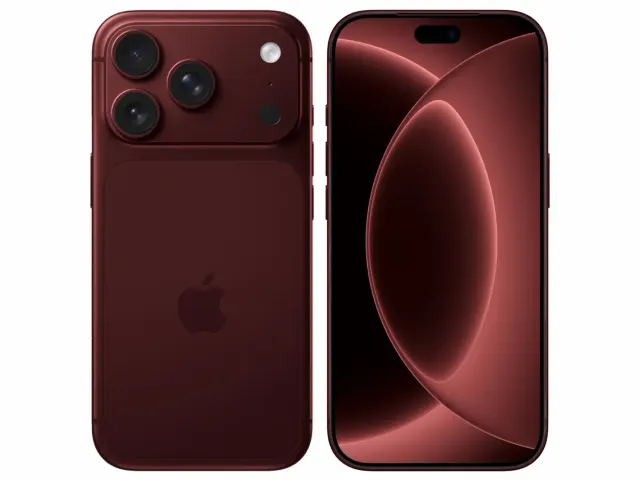
Apple iPhone 18 Pro
"The iPhone 18 Pro is now a confirmed $1,199 flagship with meaningful hardware changes, but launch specifications do not prove that those changes improve ownership enough to justify upgrading. Wait for independent battery, thermal, camera and C2 modem testing if your current phone still works well."
"Starts at $1,199 in the US"
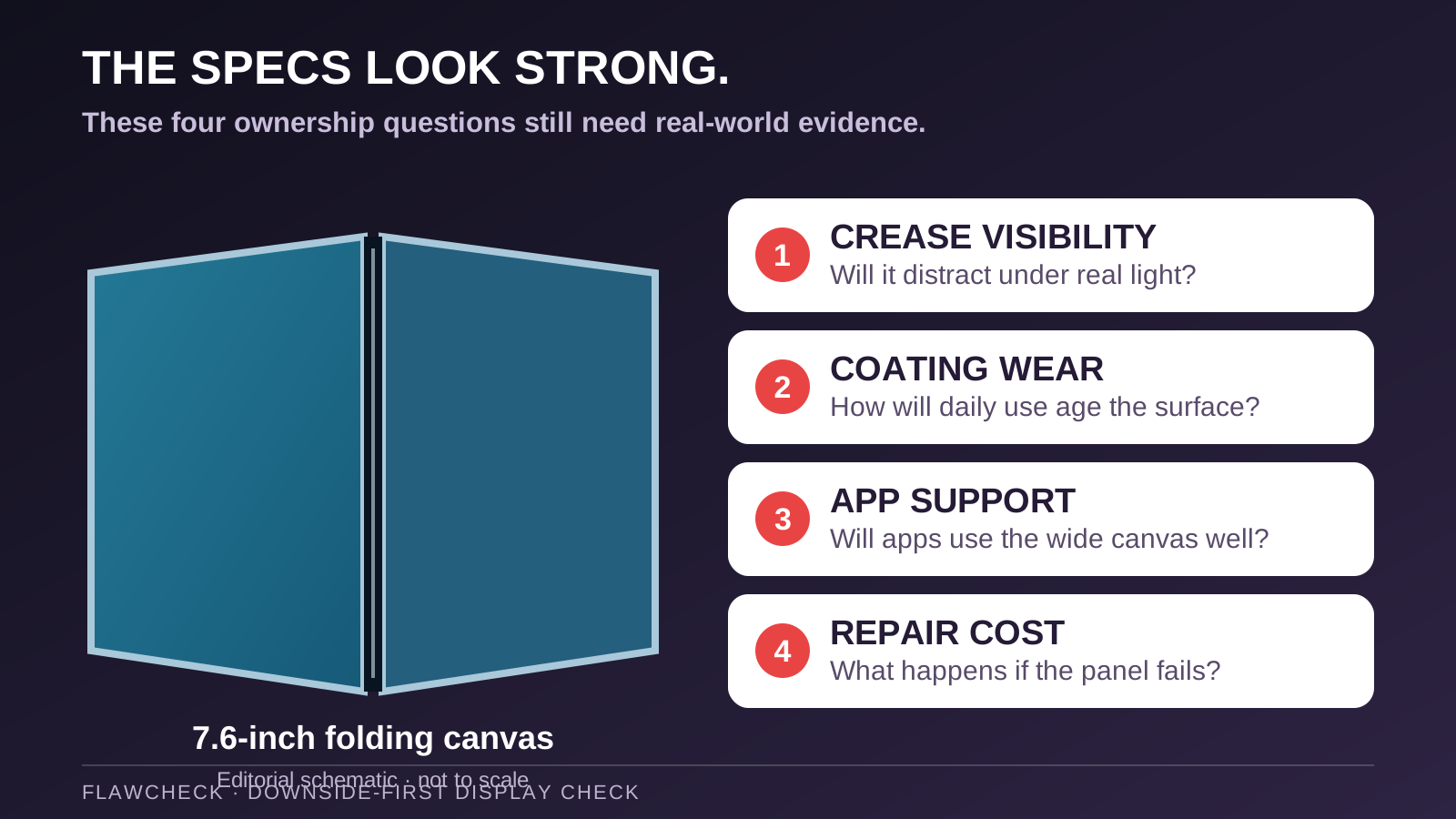
Apple iPhone Duo display
"The iPhone Duo display has strong confirmed specifications, but its most important ownership questions are time-dependent. At $1,999, wait for retail crease, abrasion, app-continuity and repair evidence unless the large folding canvas outweighs first-generation uncertainty."
"Flexible-display aging cannot be established before retail use"