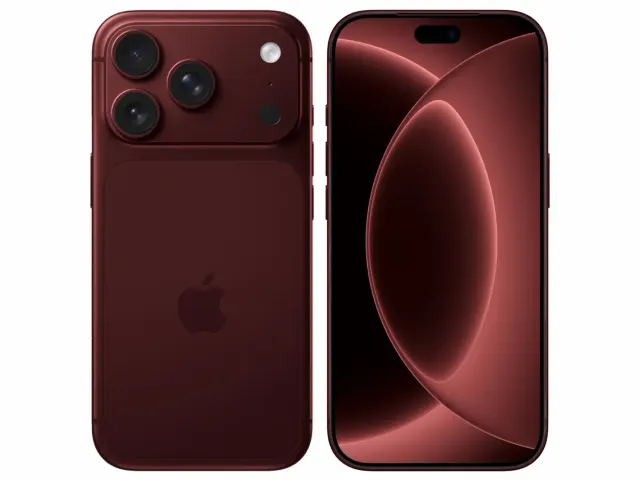
Quick verdict: Buy an older flagship when a specific phone has a camera, display, performance or other feature you will use, its remaining support fits the years you plan to keep it, and its condition, warranty and price survive inspection. Buy a new mid-range phone when predictable condition and seller protection matter more, or when a possible battery or screen repair would consume the flagship’s saving. Neither category wins automatically: a two-year-old flagship with a long support promise may outlast a new mid-ranger’s policy, while a three-year-old flagship may have much less time left.
Start with two offers in the same market. Match storage and final price, establish the older device’s condition, then ask what any hardware advantage does for you. This guide uses dated Vietnamese offers to demonstrate the decision, not to recommend an uninspected used unit.
Decision in 30 seconds: Choose the older offer only if its condition, support runway and current total cost are known and a feature you use justifies the trade-off. Choose the new offer when those facts cannot be established or predictable ownership matters more.
If your shortlist crosses operating systems, see Used iPhone vs New Android at the Same Price for US offer examples that separate model features from the condition of a refurbished unit.
What does “old flagship” mean?
“Old” describes the model generation. It does not tell you whether the particular handset has been used. Three offers for the same older model can carry very different risks:
Older model ≠ used phone. Establish the condition of the exact offer before assigning used-phone risks.
| Offer | What to verify before comparing it with a new phone |
|---|---|
| New old stock | Sealed status, activation history, local manufacturer warranty start, storage conditions and the return policy. An unused phone still belongs to an older support generation. |
| Used | The specific unit’s display, battery evidence, repair history, locks, regional model, seller warranty and returns. A cosmetic grade says little about internal condition. |
| Refurbished | Who did the work, what was tested or replaced, battery standard, replacement-part policy and written warranty. The word alone does not promise a new battery or manufacturer certification. |
An opened or returned phone may be advertised as “open box” or “activated”; ask what the seller can document. A “like new” label cannot establish factory-new battery, water sealing or display condition.
Compare the actual deal, not the original tiers
Record the model number, region, RAM and storage, condition grade, displayed price, city, seller and date for both choices. Then obtain the amount payable without optional trade-in, membership, financing or bundled-service credits. A color or individual used unit may be unavailable at the advertised price. The price at a model’s launch has no role in this calculation except to explain why its present price looks surprising.
Match storage before calling an offer a bargain. A 256GB used flagship compared with a 128GB new phone can make the new option look cheaper while leaving a different long-term storage constraint. Choose capacity for the years you plan to keep the phone. Compare local warranty and returns separately from the manufacturer’s software promise. “Seven years of updates” is not seven years of repair coverage.
Launch price is not today’s value. Compare final purchase offers and useful features at your current budget.
Ask: Which unmet need or plausible expense could reverse today’s price advantage during my planned ownership?
Where an older flagship may justify the trade-off
A flagship can have a dedicated telephoto camera, faster wired data transfer, stronger sustained processing or a higher-resolution screen that the mid-ranger lacks. These are reasons to investigate, not category-wide guarantees. Check representative photos or videos for the scenes you shoot, the actual camera modes you need and how the particular used unit’s lenses and stabilization behave. A 3x optical camera may be worth more than a headline megapixel count to someone who regularly photographs subjects at a distance; it may be worth nothing to someone who mainly uses 1x.
For demanding games or video work, look for tests of the finished phone under a prolonged workload: game build, settings, frame rate over time, frame pacing and thermal conditions. A processor name or peak score does not establish sustained play. Our guides to what makes a phone fast and reading phone benchmarks cover the underlying tests. An older review and a newer review may use different benchmark versions or software; do not subtract their displayed scores as though they came from one controlled test.
The premium screen needs a condition check. Inspect the unit for persistent image marks, dead pixels, uneven tint and touch problems at several brightness levels. Check daylight visibility if relevant; advertised peak brightness does not promise indefinitely sustained outdoor brightness. An original IP rating also cannot prove the used handset’s current sealing. Our IP68 and water-damage warranty guide explains the separate warranty question.
Where a new mid-range phone may make more sense
A genuinely new unit removes much of the uncertainty about previous owners, repairs and charging cycles. Its return and warranty terms may be simpler to establish. Verify the actual seller policy rather than assuming every new phone has identical coverage. More remaining software support can matter if you expect to keep the handset for years, especially when the older option’s security horizon falls short of that plan.
New does not prove the best battery endurance. An independent 2026 Galaxy A57 test found disappointing runtime relative to its comparison group despite the published 5,000mAh capacity. That result describes the review unit under its test conditions. It does not tell us how an individual used flagship will perform today. A separate Galaxy A37 test reported good everyday usability and battery life, with camera and display caveats. The two model-level findings are reasons to read the methods and choose by needs, not to presume that all new mid-rangers behave alike.
If you mostly message, browse, stream and take occasional 1x photos, an extra flagship camera may not solve a problem you have. A new phone with suitable size, storage and support can be sensible even when the older flagship has stronger hardware on paper. Check its display, camera and regional configuration too.
The hidden costs: support, battery, repairs and seller terms
Count support remaining at purchase, rather than repeating the number announced at launch. Samsung said the Galaxy S23 series would receive four generations of OS upgrades and five years of security updates. The Galaxy S24 series received a longer commitment: seven OS generations and seven years of security updates. Samsung announced up to six OS/One UI generations and up to six years of security updates for Galaxy A57 and A37. Samsung explicitly measures the A57/A37 security window from first global launch and says availability and timing may vary by model and market. Buying later does not add the full launch promise to your purchase date. Verify the exact regional model and current security status before treating an approximate horizon as an exact end date.
Our long-term phone ownership guide explains how software support, parts and repair access interact over several years.
Put your planned ownership period beside that runway. If you plan to use a phone through a date beyond its expected security support, ask whether the shorter runway is acceptable. If both models cover your period, the difference may matter less than a failing battery or missing camera feature. OS upgrades and security patches are separate commitments; a phone can stop receiving major OS versions while still receiving security updates.
Battery condition is unknown until evidenced on a listed used unit. A 2023 S23 review and a 2024 S24+ review measured new review samples; neither establishes the runtime of a particular 2026 resale unit. Ask for credible unit-specific diagnostics and a local battery-replacement quote. If a seller cannot document the condition, treat the uncertainty as a decision factor, not as a made-up battery-health percentage.
Use a simple sensitivity test rather than an invented “safe discount”: older-phone purchase price + plausible repair you would actually authorize + unavoidable fees versus new-phone final price. A repair is a scenario, not a prediction. For an illustrative scenario, assume an older phone costs 9 million đồng and a suitable new phone costs 10 million đồng, before any extra fees. An uncovered repair of 1 million đồng would use up the initial price difference; a smaller job can still be worth paying for features you value. Confirm parts availability, repair price and who pays shipping before putting numbers in a published example. A seller warranty may exclude the fault you worry about; read the terms and return deadline. A battery replacement question has its own detailed treatment in our repair-or-replace guide.
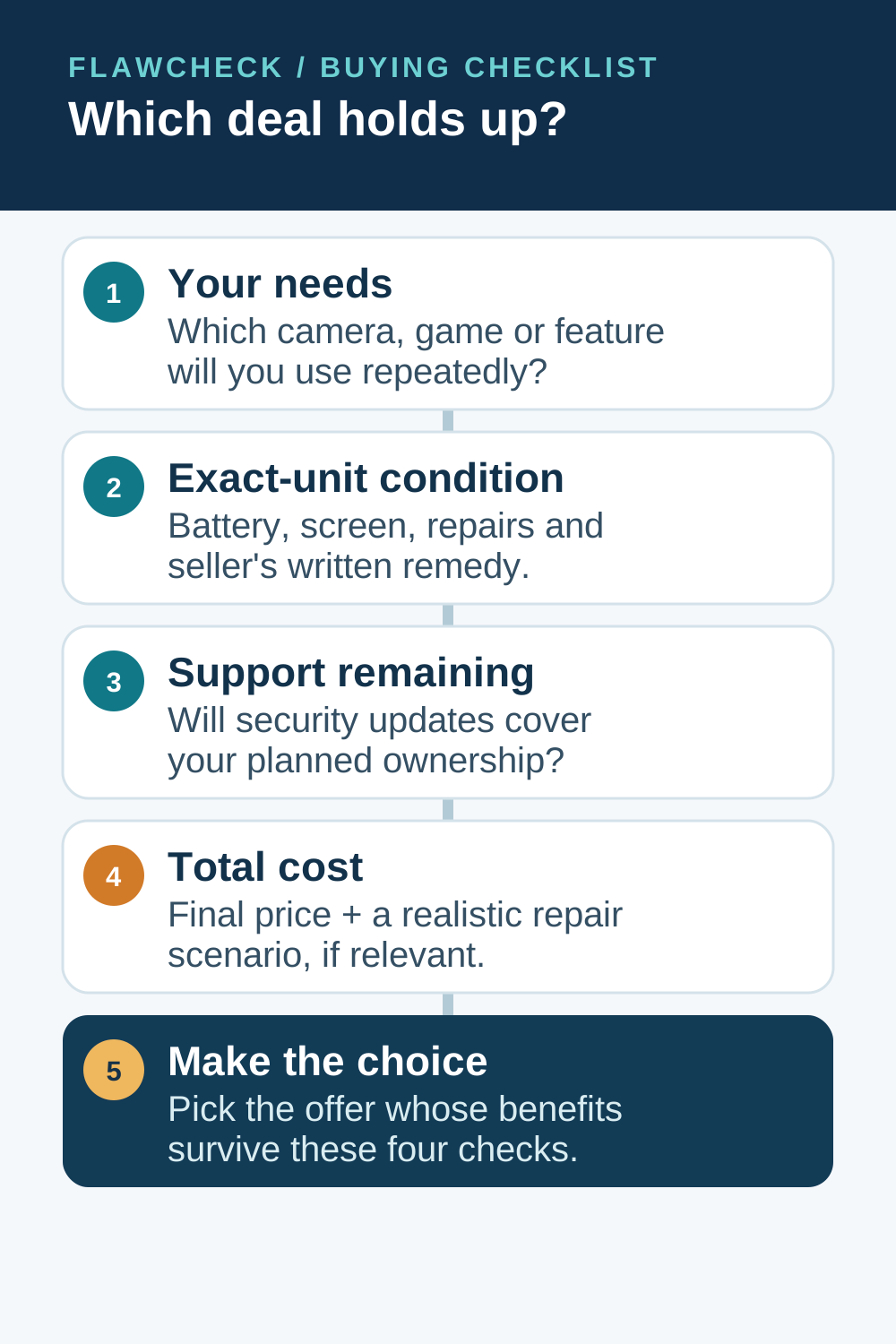
Two candidate comparisons—and the point where each answer changes
Price evidence limit: These Vietnam examples were researched on September 29, 2026 (UTC). Used-phone product pages support the listed model, storage, cosmetic grade and asking price below. We could not confirm new-phone prices on the exact 256GB product pages, so these are candidate comparisons, not established same-budget deals. Confirm both final prices in the same city, stock and seller terms before using either pair.
Used Galaxy S23 256GB versus new Galaxy A37 256GB
CellphoneS listed the Galaxy S23 8/256GB in “Cũ Đẹp” condition at 8.69 million đồng, including several color options. This is an advertised used-unit price, with local stock, exact unit and checkout conditions unconfirmed. Compare it with the new Galaxy A37 8/256GB product listing, obtaining a dated final quote for the same city. We do not publish a price gap because that new-phone quote has not been verified.
The S23 review describes a Snapdragon 8 Gen 2 for Galaxy phone with a 3x telephoto camera; the A37 review finds a useful daily phone with good measured battery life. Those reviews test different samples, years and methods. They cannot tell us which will run longer on a charge when this used S23 is purchased. The S23’s older support commitment also makes your intended keeping period more consequential than the camera specification alone.
When S23 may win: you repeatedly use its telephoto or other verified features, can inspect a sound unit, accept its shorter remaining support, and the seller’s protection plus the discount cover your uncertainty. When A37 may win: you want a known-new phone for several years, need its remaining update policy, or cannot verify the S23’s battery, display and repair history. Any saving established by your final quotes is a margin to test against a real local repair quote, not a universal verdict.
Used Galaxy S24+ 256GB versus new Galaxy A57 256GB
Điện Thoại Vui displayed a Galaxy S24+ 12/256GB “Cũ Đẹp” at 12.59 million đồng with a six-month seller warranty, across the listed colors. Stock, exclusions and an individual unit’s condition were not confirmed. Compare it with the new Galaxy A57 8/256GB product listing. Storage matches, but RAM does not; obtain the exact A57 configuration and final local quote before treating the pair as a similar-price choice. A price shown for an A57 128GB variant cannot establish the 256GB deal.
This pair corrects an easy assumption: the older S24+ was given a seven-year update promise at launch, while the new A57 was promised up to six years. In September 2026 the S24+ has already used part of its runway, so determine the remaining dates rather than automatically declaring either phone the support winner. The Vietnamese S24+ offer lists an Exynos 2400 variant; verify the exact device code. The Exynos S24+ review and A57 review can guide questions about displays, cameras and sustained behavior, but their new test units cannot certify this used phone’s battery or screen.
When S24+ may win: an actual unit is available near the displayed price, it passes inspection, and its screen, telephoto, memory or other documented advantage answers a regular need. When A57 may win: S24+ stock or history cannot be established, seller remedies are too limited for your risk tolerance, or you prefer the new unit without relying on a repair scenario. If your confirmed prices are close, an uncovered expense can change the cash comparison. Neither outcome can be finalized from the listings alone.
Choose for the years you will actually keep the phone
| Your situation | Choice and reversal condition |
|---|---|
| You shoot photos or video frequently | Consider: An older flagship with the specific camera mode and verified samples you need. Reconsider if: Lens damage, unstable video, weak battery, expensive repairs or a new model whose main-camera output better suits you. |
| You play demanding games for long sessions | Consider: The phone with relevant sustained game tests, not the higher peak score. Reconsider if: Heat, frame pacing, software/game version differences or a used unit whose condition is unknown. |
| You mainly browse, message and stream | Consider: A new mid-ranger that meets your size, storage and support needs. Reconsider if: A verified older flagship at a compelling price with a feature you will genuinely use. |
| You intend to keep it several years | Consider: Compare remaining security support and local repair access for both. Reconsider if: A shorter-than-planned runway, unavailable battery parts or unexpectedly costly display repair. |
| You do not want to inspect a used handset | Consider: A new phone with clear return and warranty terms. Reconsider if: A genuinely new older flagship or a refurbished offer with documented standards and seller protection. |
If you want both long support and telephoto, check whether either offer actually satisfies both.
Before you pay
- Save the exact offer: price, date, city, SKU, RAM/storage, condition and screenshot of warranty and returns. Confirm the final payable amount without conditional incentives.
- Check the manufacturer’s policy for the model and its current security-update status. Compare remaining support with the date you expect to replace the phone.
- For an older unit, ask for activation and repair history, battery evidence, display inspection, account-lock clearance and the exact handset identifier. Confirm local SIM/eSIM and network compatibility for that variant.
- Obtain an actual local battery or screen-repair quote if that expense could alter the decision. Read which failures the seller will remedy, for how long and on what terms.
- Only then compare the premium features you will use. Walk away if the offer cannot substantiate the facts on which your verdict depends.