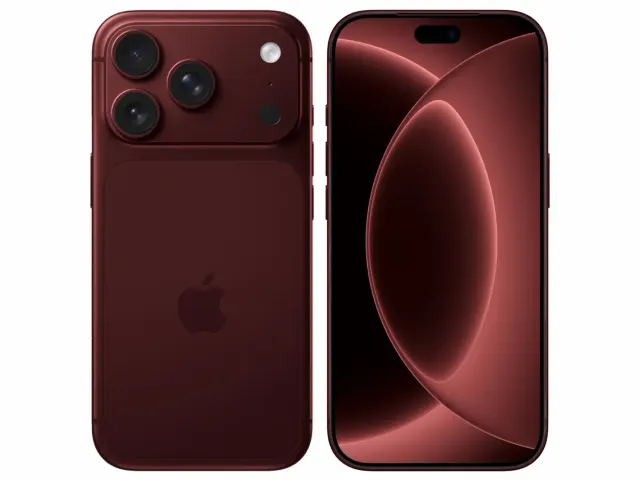
Phone display specifications look more informative than they really are. One phone advertises OLED, another AMOLED, and another pOLED. A flagship adds LTPO, while Apple and Samsung use names such as Super Retina XDR, ProMotion and Dynamic AMOLED.
These labels sound like competing technologies, but most describe different layers of the same display. That matters because none of them alone tells you whether a screen is comfortable at low brightness, readable outdoors, accurately calibrated or affordable to replace.
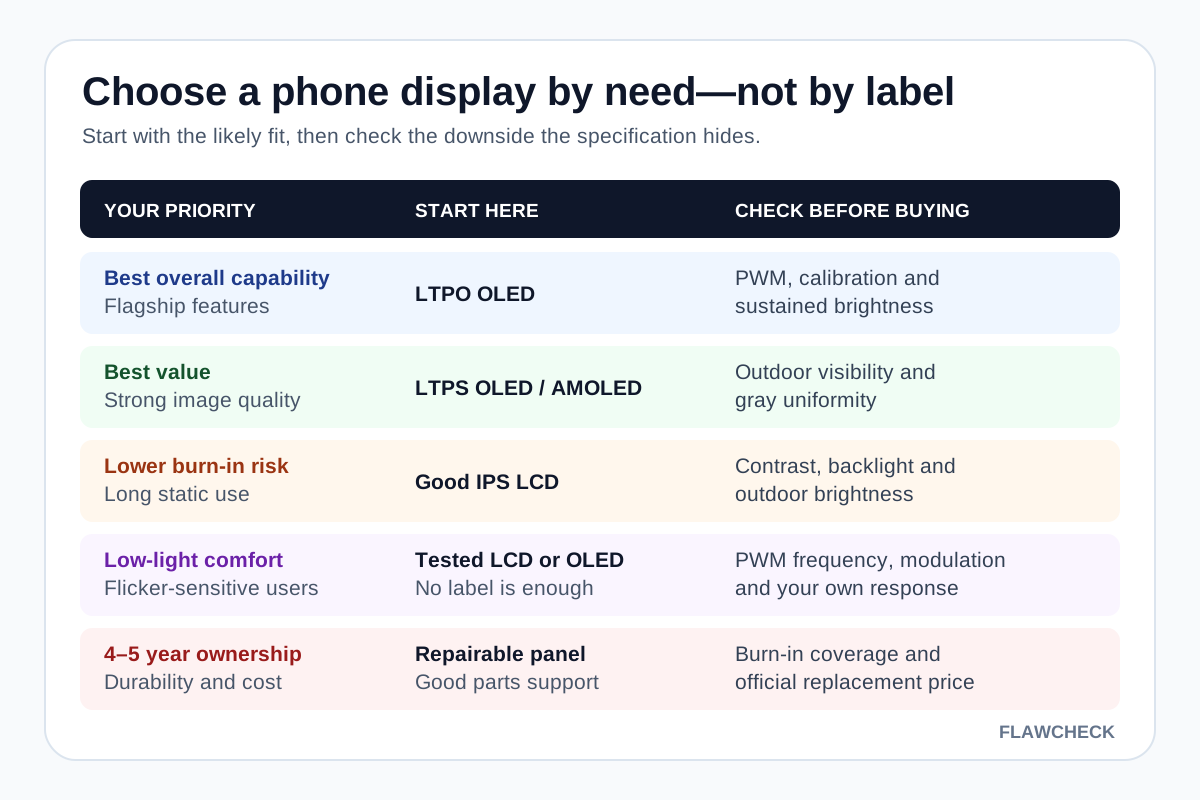
The short answer: a well-tuned LTPO OLED is the most capable mainstream combination, but it is not automatically the best display for every buyer. A good LTPS OLED can offer nearly the same visible quality for less money, while a good IPS LCD can avoid OLED burn-in and may cost less to repair.
The useful question is not simply “Is AMOLED better than OLED?” It is: what part of the display does each term describe, and what buying risk does it leave out?
Which phone display technology is best?
LTPO OLED offers the widest current capability: deep blacks, fast response, HDR highlights and adaptive refresh control. But LTPO does not guarantee that a phone always reaches 1Hz, and OLED does not guarantee accurate colors, comfortable dimming or long-term freedom from burn-in.
| If you prioritize | Start by considering | Check before buying |
|---|---|---|
| Broadest flagship capability | LTPO OLED | PWM, calibration and sustained brightness |
| Strong value | LTPS OLED or AMOLED | Outdoor visibility and gray uniformity |
| Lower burn-in risk | IPS LCD | Contrast, backlight quality and brightness |
| Low-light comfort | A display tested for flicker | PWM frequency, modulation and your response |
| Four-to-five-year ownership | A repairable, supported panel | Burn-in coverage and replacement cost |
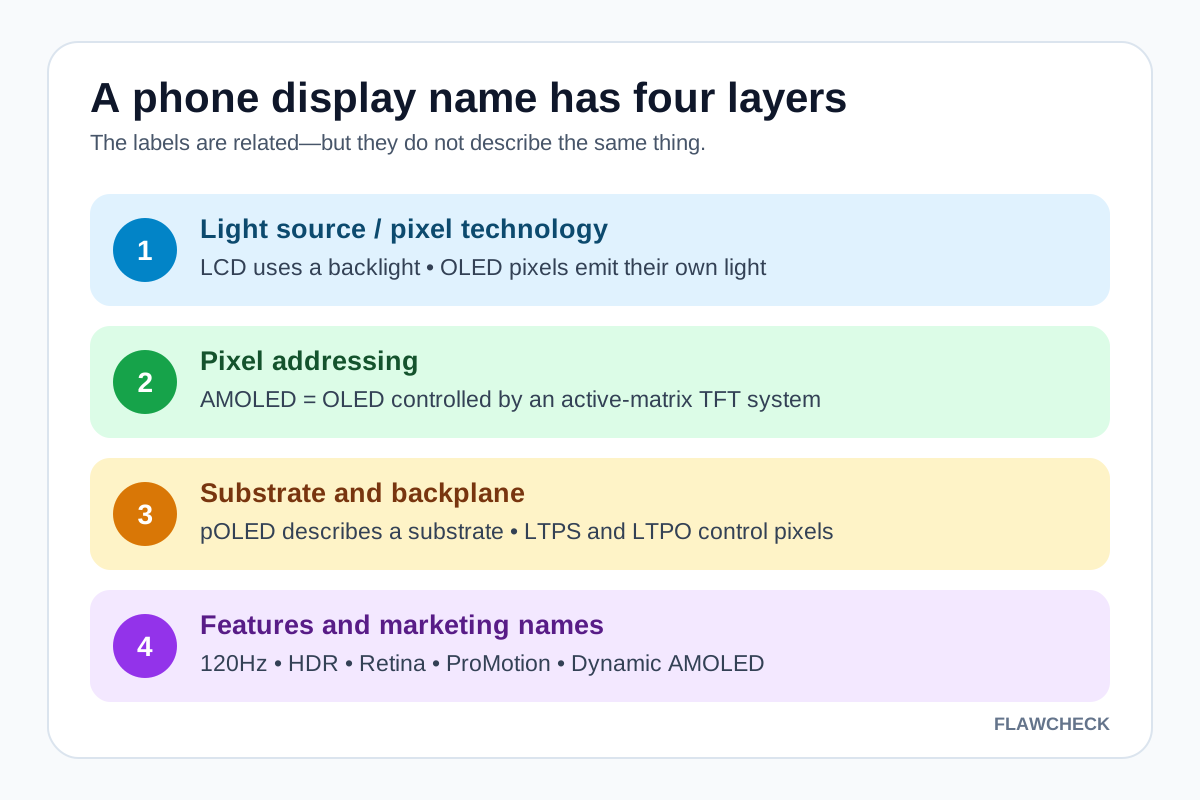
The four layers behind every display name
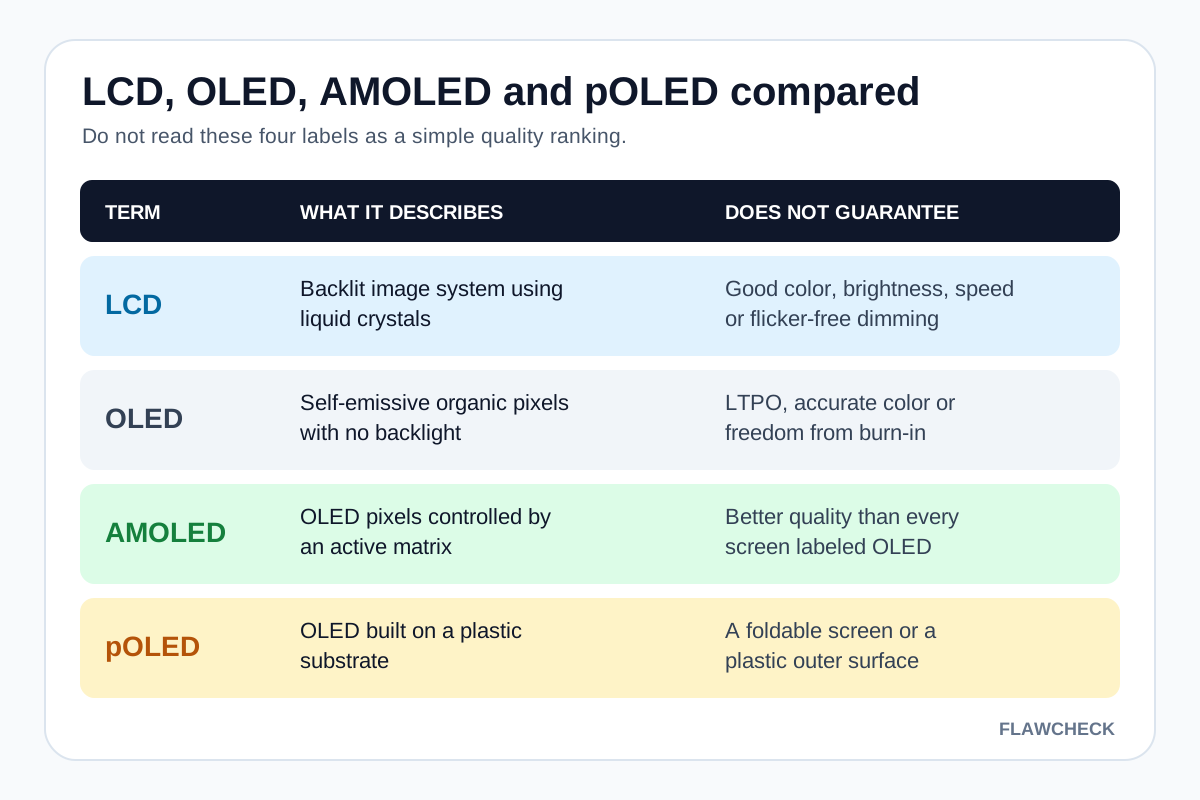
First comes the light-producing technology. LCD uses a backlight that shines through liquid crystals and color filters. OLED pixels create their own light and can switch off individually.
Second is pixel addressing. AMOLED means active-matrix OLED: a transistor matrix controls the pixels. It is a type of OLED, not a rival to OLED.
Third are the substrate and backplane. The “p” in pOLED commonly identifies a plastic substrate. LTPS and LTPO describe transistor backplanes used to control pixels. A single panel can therefore be pOLED, AMOLED and LTPO at the same time.
Fourth are features and marketing labels: 120Hz, adaptive refresh, HDR, Retina, ProMotion and Dynamic AMOLED. These may be useful product names, but they are not universal engineering standards. For a buying decision about motion, see why a 120Hz phone display can still feel choppy: panel refresh, app FPS and frame pacing answer different questions.
LCD: IPS, TFT and LTPS LCD explained
LCD’s main disadvantage is structural: its pixels cannot produce light independently. A backlight remains active behind the image-forming layers, limiting black levels and pixel-level contrast. The display assembly may also be thicker than OLED.
“TFT LCD” is a broad technical description, not proof that a screen is poor. TFT means thin-film transistor; the transistors help control individual pixels. The label does not reveal brightness, color gamut, backlight uniformity or refresh rate.
IPS changes how the liquid crystals are arranged and is commonly associated with wider viewing angles and more stable colors than older LCD implementations. A good IPS LCD can provide accurate color, avoid OLED-style differential pixel aging and cost less to replace. Its weaknesses include gray-looking blacks, backlight bleed and weaker dark-room contrast.
LTPS LCD uses low-temperature polycrystalline silicon in its TFT backplane. It can support dense, fast displays, but “LTPS” does not promise good calibration or efficient variable refresh behavior.
Budget phones still use LCD because manufacturing is mature, repairs can be cheaper and there is no OLED burn-in. But a low-cost LCD may still have weak outdoor brightness or uneven backlighting. LCD is not automatically outdated—or automatically comfortable.
OLED: self-lit pixels with different weaknesses
OLED’s key advantage is also the source of its trade-offs: each pixel produces its own light. Individual pixels can turn off for near-perfect blacks, while fast response helps motion look clean.
The organic light-emitting materials age with use. Static bright elements, heat and high brightness can contribute to uneven pixel wear. Pixel shifting and compensation systems reduce risk but do not make OLED immune to burn-in.
Many OLED phones also use pulse-width modulation to control brightness. Most users do not consciously see the pulses, but some report discomfort with particular panels. PWM frequency alone is not a complete comfort score; modulation depth, waveform, brightness and individual sensitivity matter too.
OLED vs AMOLED: a misleading comparison
OLED describes the light-producing family. AMOLED means an OLED panel with active-matrix pixel control. Modern high-resolution phone OLEDs generally require active-matrix control even when the manufacturer lists them simply as “OLED.”
That means AMOLED is a type of OLED. The label does not prove better brightness, PWM, color accuracy, burn-in mitigation or repairability.
What do Super AMOLED and Dynamic AMOLED mean?
Samsung has used Super AMOLED for AMOLED displays with closer integration between the touch layer and display assembly. Dynamic AMOLED and Dynamic AMOLED 2X identify more premium Samsung display families and may be associated with HDR, wide color or high refresh rates depending on the device.
The names do not guarantee identical hardware across Samsung phones. “2X” does not mean twice the resolution or twice the quality. Buyers still need device-specific brightness, PWM and refresh-rate evidence.
Is pOLED worse than AMOLED?
pOLED commonly describes OLED built on a plastic substrate. Plastic allows thinner or physically flexible panels, but it does not mean the outer surface is exposed plastic or that the finished phone can fold.
pOLED and AMOLED describe different characteristics: substrate versus pixel control. A panel can be both. Neither label establishes brightness, calibration, PWM, foldability or durability by itself.
LTPS vs LTPO: the backplane behind refresh claims
LTPS and LTPO control pixels; they do not produce the image. LTPS offers fast transistor performance and can support 120Hz or higher. Many LTPS phones switch among a limited set of refresh rates.
LTPO combines transistor characteristics intended to preserve performance while reducing leakage. It can make low and adaptive refresh operation more efficient, especially for static pages, photos and always-on displays.
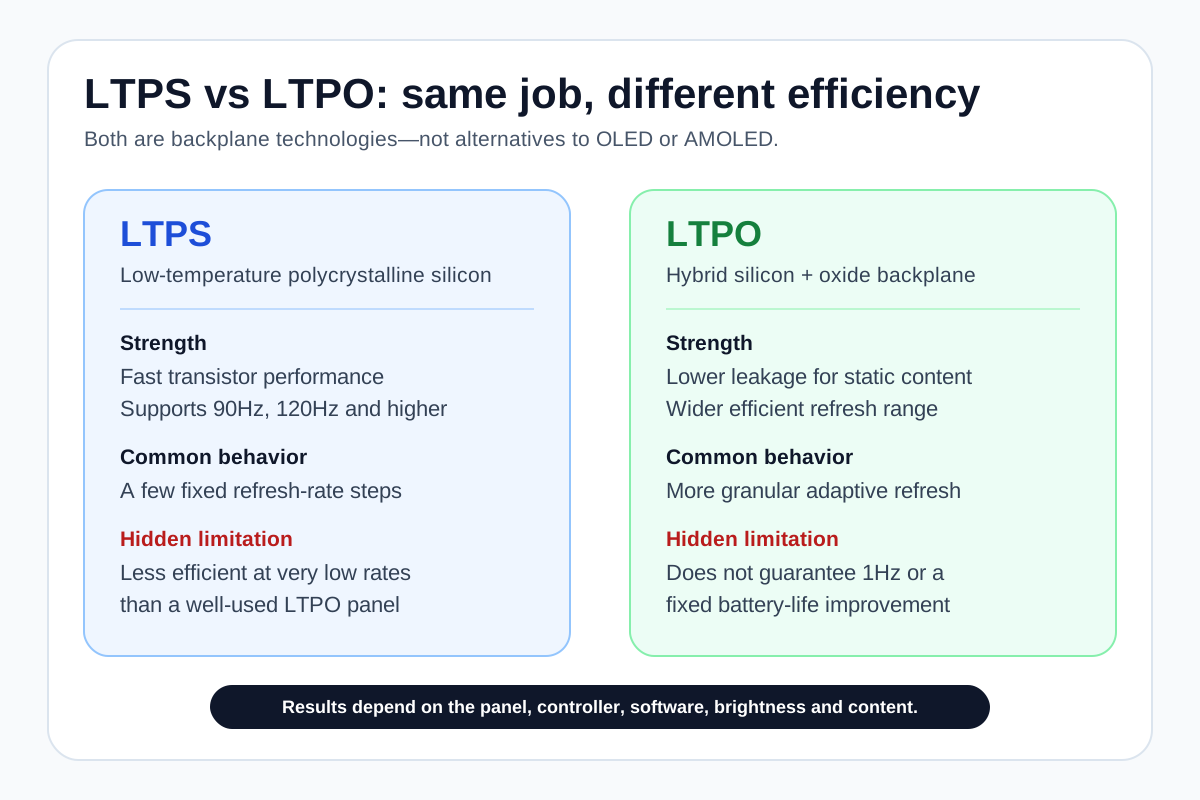
LTPO does not automatically mean 1Hz. Minimum rate depends on panel generation, brightness, controller, operating system, app and display mode. Nor does LTPO guarantee a fixed battery saving. Continuous scrolling, gaming and navigation can keep a panel at high refresh rates. Our guide to charging a phone to 80 percent similarly explains why one efficiency feature cannot predict total battery longevity.
Display technology by phone price
Budget phones commonly use IPS LCD, 120Hz LCD or low-cost OLED. A cheap OLED may deliver deeper blacks while losing ground in outdoor brightness, uniformity or low-brightness comfort.
Midrange phones often advertise 120Hz AMOLED but use LTPS and a few fixed refresh steps. This can still look smooth; the main limitation is refresh efficiency rather than basic image quality.
Upper-midrange models may receive brighter panels and better calibration without LTPO. Flagships combine flexible OLED, LTPO-class backplanes, HDR and more advanced brightness management—but also bring higher replacement costs. These terms describe the panel, not the exterior cover glass; our phone screen glass guide explains why scratch resistance and drop resistance need separate evidence.
Foldables require flexible OLED plus protective films, adhesives and a controlled bending radius. This creates additional failure points. Read our guides to five-year foldable durability, peeling foldable screen protectors and the iPhone Duo foldable-display risks before treating “flexible OLED” as a durability claim.
Brand display names decoded
| Brand label | What it generally identifies | What it does not guarantee |
|---|---|---|
| Apple Retina | Perceived pixel density and Apple branding | LCD or OLED by itself |
| Liquid Retina | Apple LCD display family | OLED blacks or adaptive refresh |
| Super Retina XDR | Apple OLED display family with HDR positioning | No burn-in or PWM |
| ProMotion | Adaptive high-refresh behavior | One specific panel technology |
| Samsung Super AMOLED | Samsung AMOLED product family | Flagship brightness or LTPO |
| Dynamic AMOLED | Premium Samsung AMOLED branding | Identical quality across models |
| Motorola pOLED | OLED using a plastic substrate | Foldability or superior quality |
| OnePlus Fluid AMOLED | AMOLED marketed around smooth motion | LTPO on every model |
| Eye-care OLED | A specified dimming or comfort feature | Comfort for every user |
Xiaomi, Redmi, Poco, Honor, Huawei, Oppo, Vivo, OnePlus and Realme frequently emphasize peak brightness, high-frequency PWM or proprietary eye-care names. These features can be useful, but peak brightness may apply only to a small HDR window, and a high PWM number does not guarantee comfort for everyone.
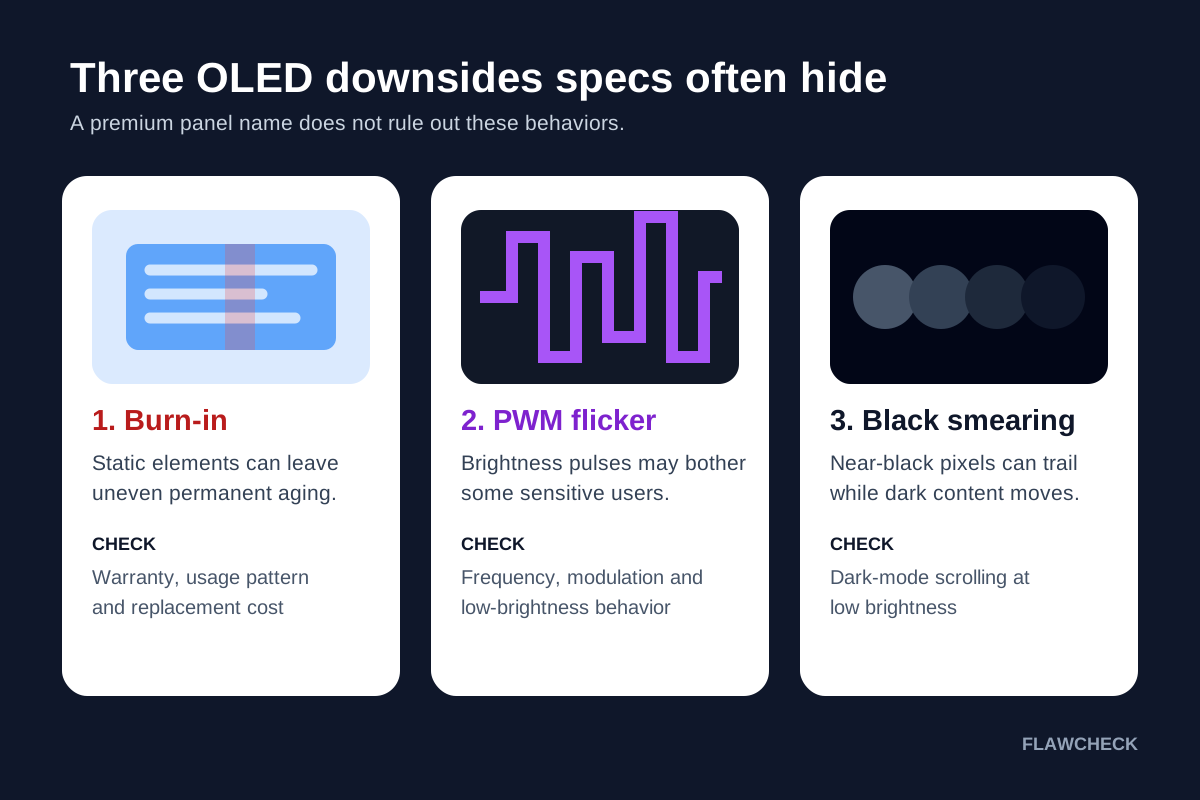
OLED downsides specification sheets often hide
Burn-in and uneven aging
Burn-in is accumulated uneven wear, not a defect that appears on every OLED. Static interface elements, high brightness and heat can increase risk. Buyers planning long ownership should check warranty terms and replacement prices. If you already see a faint keyboard or status-bar outline, our phone OLED burn-in guide helps separate temporary image persistence from a mark that needs a service assessment.
PWM flicker
PWM rapidly changes how long pixels remain illuminated. Some users report discomfort with particular screens, but a symptom alone cannot establish its cause. Test the exact phone at low brightness rather than treating one frequency number as a universal safety score. Our PWM dimming guide explains how to compare frequency, waveform and modulation across brightness levels.
Black smearing and gray uniformity
Near-black pixel transitions can leave trails while dark content moves. Some panels also show uneven gray tones or tinting at low brightness. These behaviors may vary between units of the same model.
Peak brightness is not sustained brightness
Peak, small-window HDR, high-brightness-mode and full-screen sustained brightness are different measurements. A large marketing number does not tell you how long the complete display remains readable outdoors. If your phone screen dims outside, use the symptom checklist to separate heat-related dimming, settings and reflected glare before judging its peak-brightness claim.
Replacement cost
Curved, foldable and LTPO OLED assemblies can be expensive. For multi-year ownership, compare the official display-replacement price and parts availability. Our long-term phone buying guide treats repair access as part of display quality rather than an afterthought.
Which display should you choose?
Choose a good IPS LCD if lower burn-in risk, static use or repair cost matters most. Choose LTPS OLED if you want deep blacks and high refresh without paying for flagship adaptive behavior. Choose LTPO OLED when always-on display and granular refresh control matter—and you accept potentially higher repair costs.
Do not choose by the panel name alone. Check outdoor brightness, low-brightness behavior, calibration, refresh switching, warranty and official replacement cost. A display is only “better” when its weaknesses fit how long and how you plan to use the phone.
Phone display buying checklist
- Is the panel LCD or OLED?
- Does AMOLED, pOLED or LTPO describe a different layer of the same display?
- What refresh rates does the phone actually use in third-party apps?
- Is the brightness figure peak, high-brightness mode or sustained full-screen output?
- Are there independent PWM and modulation measurements?
- Does dark-mode scrolling reveal black smearing or uneven gray?
- What is the official display-replacement price?
- Does the warranty cover burn-in or only manufacturing defects?
- Can panel suppliers vary by region or production batch?
- Have you tested the phone at low brightness yourself?
The best specification is not the longest display name. It is evidence that the panel behaves well in the conditions you actually use—and remains economical to own when something goes wrong.